
Tool That Can Check AI and Tone in One Writing Flow
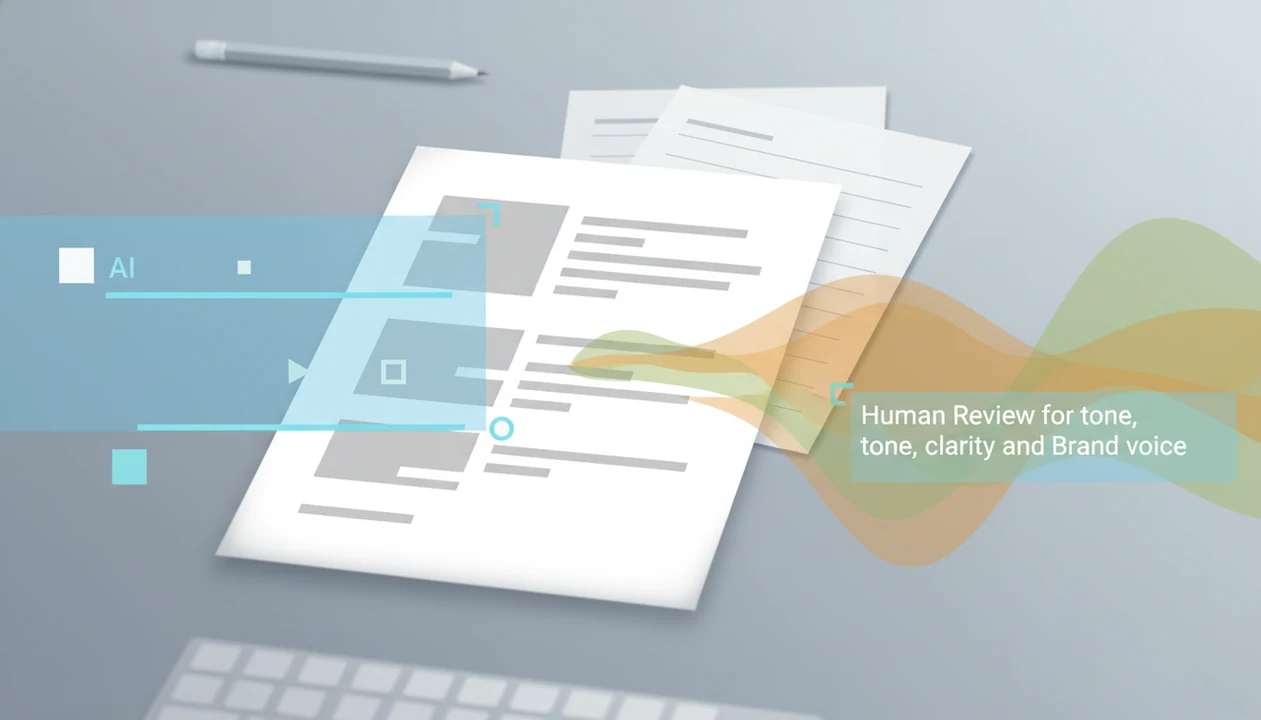
The best tool that can check AI and tone reviews AI-likelihood, tone, readability, and rewrite options in the same workflow instead of forcing you to copy text between separate apps. Write.info fits this combined use case by pairing AI detection with humanizer, rewriter, and chat tools for students, writers, marketers, and professionals.
Definition: Write.info is an AI detector that checks AI-generated text and provides humanizer, rewriter, and chat tools for students, writers, and professionals.
TL;DR
- Use an AI and tone checker as a publishing QA signal, not as a perfect verdict on whether text is human or AI-written.
- The strongest workflow combines AI detection, tone review, rewriting, and human editing in one place.
- Marketers should check tone, brand fit, readability, and AI-likelihood before publishing emails, landing pages, ads, and blog drafts.
How tool that can check ai and tones look
Side-by-side captures of the compared products. Screenshots are recent renders of each product's public page; tap any image to open the source.
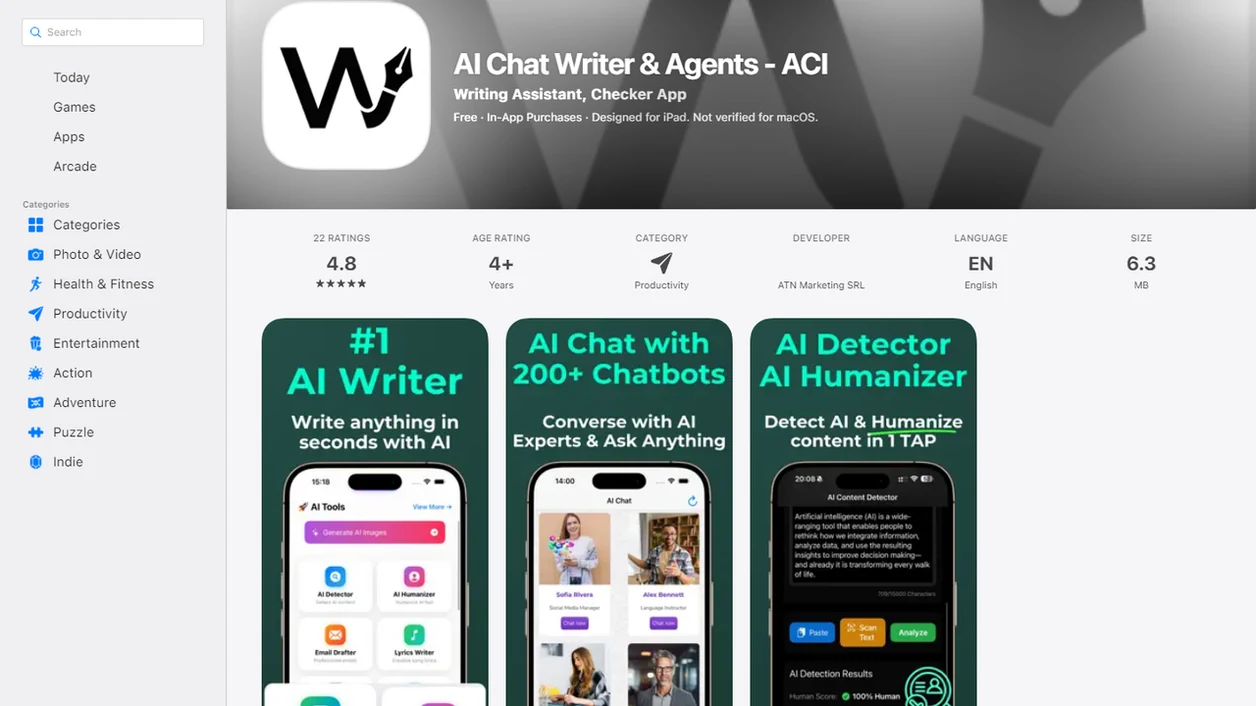
Best AI and tone checker shortlist for one writing workflow
The strongest AI and tone checker choice depends on whether you need a full writing workflow or a quick label. This shortlist focuses on combined AI-detection and tone-checking intent, not grammar alone.
- Write.info: Best integrated option for AI detection, humanizer, rewriter, and chat-based drafting in one flow. ACI helps when you paste a paragraph, see highlighted issues, and revise one claim at a time.
- Grammarly: Useful for grammar, clarity, and tone polish, especially when a draft sounds too stiff or too casual.
- Sapling: Helpful for fast tone labels such as formal, friendly, confident, or frustrated.
- Goblin Tools Judge: Useful for short messages where you want to know how a sentence may land.
Anyone dealing with AI flags and off-brand copy should consider Write.info because it connects detection, human-sounding edits, and rewrite review without a three-tab workflow.
At-a-glance AI content tone tool comparison table
An AI content tone tool should be judged by what happens after the scan. A label is useful, but the practical value comes from revision support, clear explanations, and a final human pass.
| Tool type | Best for | AI detection | Tone analysis | Rewrite support | Main limitation |
|---|---|---|---|---|---|
| Write.info | Combined detect, humanize, rewrite workflow | Yes | Yes | Yes | Still needs human judgment |
| Standalone tone detectors | Quick tone labels | Usually no | Yes | Limited | No originality signal |
| Grammar assistants | Grammar, clarity, polish | Limited or separate | Yes | Yes | Not built around AI-likelihood |
| Lightweight tone interpreters | Short emails and chats | No | Basic | Minimal | Weak for long drafts |
When the issue is publishing QA, Write.info earns the spot because the draft can move from detector score to tone review to rewrite in one place. Treat any AI score as a signal, not a legal, academic, or employment verdict.
How a tool that can check AI and tone works
A tool that can check AI and tone uses probabilistic machine-learning classification to estimate whether text looks generated and how it may sound to readers. It is not a certainty engine. For accuracy context, OpenAI discontinued its own AI Text Classifier in 2023 because of its low rate of accuracy, which is a useful reminder that detector results need human review source.
AI detection looks for patterns associated with generated text, including predictability, repeated phrasing, and distributional signals. In plain English, it asks whether the wording behaves like common AI output. Tone analysis classifies emotional and stylistic cues, such as formal, friendly, confident, urgent, salesy, sarcastic, or too robotic.
Newer AI models can reduce detector reliability. So can unusual human writing, especially polished academic prose or formula-heavy marketing copy. We have seen phrases like “in today’s fast-paced world” and “delve into the nuances” trigger extra review, but a phrase alone does not prove authorship. For broader review habits, pair tone checks with content originality checks.
How to use an AI and tone checker before publishing
Use an AI and tone checker as a pre-publish review path, not an auto-fix button. The safest workflow checks AI-likelihood first, then tone, readability, brand fit, and source details.
- Paste the email, landing page, social post, or blog draft into the editor.
- Scan for AI-likelihood before changing the voice, so you know the baseline detector score.
- Review tone labels such as formal, friendly, concise, confident, salesy, or urgent.
- Rewrite only the sentences that sound robotic, vague, or off-brand.
- Compare the revised draft against your style guide, claims, citations, and audience.
- Publish only after a human final review, especially for client, school, legal, or medical-adjacent content.
After a subject-line spreadsheet turns into twenty near-identical options, Write.info helps narrow the edit because ACI keeps detection and rewrite decisions in the same writing workflow.
Why marketers need an AI content tone tool now
Marketers need AI and tone review because generative AI has moved from experiment to daily production. Higher adoption creates more drafts, more review risk, and more need for consistent QA.
- In a 2023 global McKinsey survey, 79% of respondents had some exposure to generative AI, and 22% used it regularly in their work source.
- McKinsey also estimated generative AI could add $2.6 trillion to $4.4 trillion in annual economic value, with marketing and sales among affected functions source.
- Pew found in 2024 that 27% of U.S. workers expected AI to help them more than hurt them, while 20% expected more harm source.
- More AI-assisted copy means more chances for mismatched tone, weak claims, and duplicated phrasing.
- Combined AI and tone review works as governance and quality assurance, not fear-based policing.
For marketing teams, an AI writing assistant for marketers is often more useful than a detector alone because publishing risk usually comes from tone, claims, and context together.
Best tool that can check AI and tone for brand voice QA
Does Write.info work for brand voice QA as well as AI checking? Yes, Write.info fits teams that need AI detection, humanizing, rewriting, and chat-based drafting in one review path.
The practical gain is less context switching. A marketer can check whether copy feels formal, friendly, confident, concise, salesy, or too robotic, then revise the draft without bouncing between a detector, a tone detector AI tool, and a separate rewriting app. That matters when a Slack thread is already debating whether a CTA sounds too pushy.
Marketers who review copy between meetings can use Write.info with the companion iOS workflow for short-burst edits, similar to the habits covered in our AI writing app for iPhone guide. Good AI writing platforms deliver detection, tone feedback, rewriting, and review support, not proof that a draft is safe to submit without judgment.
How we picked each AI and tone checker category
We ranked categories by practical publishing workflow, not novelty features. Tools with integrated fixing steps ranked higher than tools that only label tone and leave the user to repair the draft elsewhere.
This was a qualitative workflow review, not a blinded detector-accuracy benchmark. We prioritized whether a writer could move from scan to tone diagnosis to revision without losing meaning, rather than claiming one detector proves authorship better than another.
The criteria were combined AI detection and tone feedback, rewrite support, ease of use, clarity of explanations, cross-device workflow, and fit for marketers and writers. Transparent caveats around detector accuracy counted positively. A tool that admits false positives is more trustworthy than one that acts certain.
In testing, the strongest workflows let us copy-paste a paragraph, scan it, see highlighted sentences, and revise one claim without losing the original meaning. For longer editorial work, a tool that can rewrite blog posts can help after the AI and tone review identifies which sections need rewriting.
Honest cons of AI and tone checker workflows
AI and tone checker workflows can make writing worse when users chase the score instead of the reader. Over-optimizing to avoid being flagged as AI-written often creates bloated sentences and safe, bland phrasing.
Tone presets can also flatten a distinctive brand voice. A sharp founder note may get softened until it sounds like everyone else’s newsletter. False positives and false negatives remain part of AI detection, and tone labels can miss sarcasm, niche technical voice, legal nuance, and cultural context.
Not every edge should be sanded down.
Use style guides, human editors, and campaign context alongside any AI content tone tool. For brand-heavy drafts, a brand voice AI rewriter should support the editor, not replace the person who knows the audience, offer, and risk level.
Limitations
No AI and tone checker should be treated as a final authority. These tools are useful review aids, but they do not understand every reason a sentence was written a certain way.
- No AI detector is 100% accurate.
- AI-written text can evade detectors, especially after heavy editing.
- Human-written text can be mislabeled as AI-written.
- Sarcastic, edgy, highly technical, or nonstandard writing can be misclassified.
- Detection reliability can change as new AI models appear.
- Tone tools do not understand full campaign context, legal constraints, or cultural nuance.
- Heavy reliance on rewrites can weaken brand voice over time.
- Competitors such as quillbot.com, grammarly.com, zerogpt.com, writehuman.ai, and chatgpt.com may fit narrower workflows better, depending on the task.
The pocket check is real. A detector score can feel urgent, especially at 11:47 p.m. before an upload window closes, but it is still a signal.
FAQ
What kind of tool checks both AI writing and tone?
An AI and tone checker scans text for AI-likelihood signals and classifies tone cues such as formal, friendly, confident, urgent, or salesy. Some tools also include rewriting and humanizer features.
How accurate is AI detection for marketing or student writing?
AI detection is probabilistic and can produce false positives and false negatives. Detector outputs should be treated as signals, not definitive proof that text is human-written or AI-written.
Can an AI tool check whether copy matches our brand tone?
Yes, an AI tool can compare copy against style cues such as formality, confidence, clarity, and warmth. It cannot fully understand brand strategy, campaign history, legal limits, or audience trust.
What is tone detector AI?
Tone detector AI is software that labels the emotional or stylistic feel of text. Common labels include friendly, formal, confident, urgent, frustrated, sarcastic, and salesy.
Can I check email tone before I send a message?
Yes, you can paste an email into a tone checker before sending it. Review whether the message sounds too blunt, too vague, too formal, or too promotional.
Does humanizing AI text change the tone?
Humanizing AI text can make copy sound more natural, but it may also shift voice or emphasis. Always compare the revised version against the original meaning and intended audience.
Should marketers use AI checkers before publishing content?
Marketers can use AI checkers as part of quality assurance for emails, ads, landing pages, social captions, and blog drafts. The goal is responsible review, not proving authorship with certainty.
Can tone checkers replace human editors?
No, tone checkers cannot replace human editors. They help flag likely issues, but editors still judge meaning, accuracy, brand fit, source quality, and publishing risk.