
AI Detector Limitations Every Student and Teacher Should Know

AI detector limitations mean these tools can estimate whether text looks AI-generated, but they cannot prove who wrote it. A detector score should be treated as a signal for review, not as standalone evidence for misconduct, plagiarism, or authorship.
Definition: AI detector limitations are the accuracy, evidence, bias, and workflow caveats that prevent AI detection scores from proving whether a passage was written by a human or by AI.
TL;DR
- AI detectors give probabilistic scores, not proof of authorship.
- False positives and false negatives can both happen, especially with short, polished, edited, or mixed-authorship writing.
- Detector results are safest when used with context, drafting history, and human review.
AI Detector Limitations at a Glance
AI detectors estimate likelihood; they do not prove authorship. The safest reading of any detector score is, “This text shares patterns with AI-written text,” not “This person used AI.”
The main AI detector limits are false positives, false negatives, short samples, polished prose, edited AI text, and disagreement between tools. A student rereading a detector result at 11:47 p.m. before an LMS upload window closes needs a practical next step, not a verdict. Tools like Write.info should be used as review aids for revising unclear, over-patterned, or robotic passages, not as punishment engines. For teachers and editors, a detector score is often more useful as a conversation starter than as a decision point.
The score is a prompt to check the draft.
Five AI Detection Caveats Readers Should Know
- AI detector scores are probabilistic, not definitive. A high score means the passage matched learned AI-like patterns, not that the tool identified the writer.
- False positives can mislabel human writing as AI. Clean academic prose, grammar-assisted sentences, and formulaic introductions can be flagged as AI-written.
- False negatives can miss AI text. Editing, paraphrasing, translation, or a human-sounding edit can reduce detector confidence.
- Accuracy varies by context. Detector model, training data, text length, language background, and writing style can all change the result.
- AI detection is weakest as standalone evidence. A detector score should be paired with drafts, sources, version history, and human review before any serious decision.
For school settings, the broader fairness issue is covered in AI detector bias.
How AI Detector Limits Work Behind the Score
AI detector limits come from the fact that detectors compare text against learned statistical patterns, rather than identifying the actual writer. Many tools look at predictability, token distribution, repeated phrasing, sentence rhythm, and style regularity. In plain language, they ask whether the text behaves like examples they associate with AI output.
That method creates uncertainty. Short passages give the detector fewer signals. Edited drafts blur the pattern. Newer AI models may write differently from the examples used to train the detector. Clean academic prose can also look suspicious because it is often structured, cautious, and low in personal detail. A thesis sentence with red underlines across it may be human, AI-assisted, or simply revised too many times.
Different detectors can also set different thresholds. One tool may call a paragraph “likely AI,” while another labels the same paragraph “uncertain” because its training data and scoring rules differ.
False Positives in AI Detector Uncertainty
Why would human writing be flagged as AI-generated? A false positive happens when human-written text is labeled as AI-generated or high-risk by a detector.
This can happen when writing is polished, formulaic, grammar-assisted, academic, or written by a non-native English speaker. Phrases like “in today’s fast-paced world” and “delve into the nuances” are not proof of AI use; they are also common weak writing habits. A Bloomberg test of two detectors reported about 1–2% false positives on 500 pre-ChatGPT essays, though the rate may be higher in other contexts. For a related controlled study on detector bias and false positives, see Stanford researchers’ analysis of non-native English writing: https://doi.org/10.1016/j.patter.2023.100779.
Low does not mean harmless.
If a university screens 20,000 submissions, even a small false-positive rate can affect many real people. The practical issue is not just accuracy; it is what happens after the flag. We explain the student-facing risk in more detail in AI detector false positives.
False Negatives and Humanized AI Detector Limits
Can AI-written text pass as human? A false negative happens when AI-generated or AI-assisted text is labeled human, low-risk, or not detected.
Editing, paraphrasing, translation, sentence reordering, and humanizer tools can all reduce detectability. Human-AI co-writing makes the problem harder because the final draft may contain both machine-generated structure and human edits. Turnitin has said its checker may miss about 15% of AI-generated text in a document, which is a reminder that detection is not a complete audit. Turnitin describes its AI-writing indicator as probabilistic and discusses false-positive and false-negative handling in its guidance: https://www.turnitin.com/blog/understanding-false-positives-within-our-ai-writing-detection-capabilities.
This is an arms race between generation, rewriting, and detection. A user can copy-paste a paragraph into a web editor, watch highlighted sentences appear, and revise one claim at a time. That may be responsible editing, or it may be misuse. The difference depends on intent, disclosure, and policy. For revision boundaries, read bypass AI detection responsibly.
AI Detector Accuracy Evidence and Research Caveats
Evidence on AI detector accuracy is mixed, and it changes quickly. Research results depend on benchmark design, detector version, text domain, prompt type, and the time period tested.
| Evidence point | What it suggests | Caveat |
|---|---|---|
| OpenAI AI Classifier — source: https://openai.com/index/new-ai-classifier-for-indicating-ai-written-text/ | OpenAI discontinued its classifier after only a 26% success rate identifying AI-written text. | One discontinued tool does not represent every detector. |
| University of San Diego-cited research | Some detectors were described as “neither accurate nor reliable,” with false positives and false negatives. | Classroom submissions may differ from research samples. |
| PubMed Central-indexed research | Some AI-output detectors showed moderate to high success on AI text. | The same research still warned that false positives remain a meaningful risk. |
The practical takeaway is simple: AI detector uncertainty is not a bug in one product. It is a property of the task. A detector can be useful for triage, but it cannot replace source checking, draft review, or a direct conversation with the writer.
Common Myths About AI Detection Caveats
Myth 1: AI detectors prove cheating or plagiarism. They estimate AI-like patterns; they do not prove misconduct, intent, or copied work.
Myth 2: A human score means the text is definitely human. False negatives happen, especially after editing, paraphrasing, or mixed authorship.
Myth 3: All detectors work the same way. Tools use different models, training sets, thresholds, and score labels.
Myth 4: A low false-positive rate makes a tool safe for every use case. High-volume screening can still harm many people.
Myth 5: Grammar tools and clean writing are reliable signs of AI use. A neat paragraph is not evidence. Sometimes it is just a careful writer with a style guide PDF open on a second monitor.
For policy questions, the key issue is whether can AI detectors prove cheating without supporting evidence.
Responsible Use of AI Detector Uncertainty in Schools and Workflows
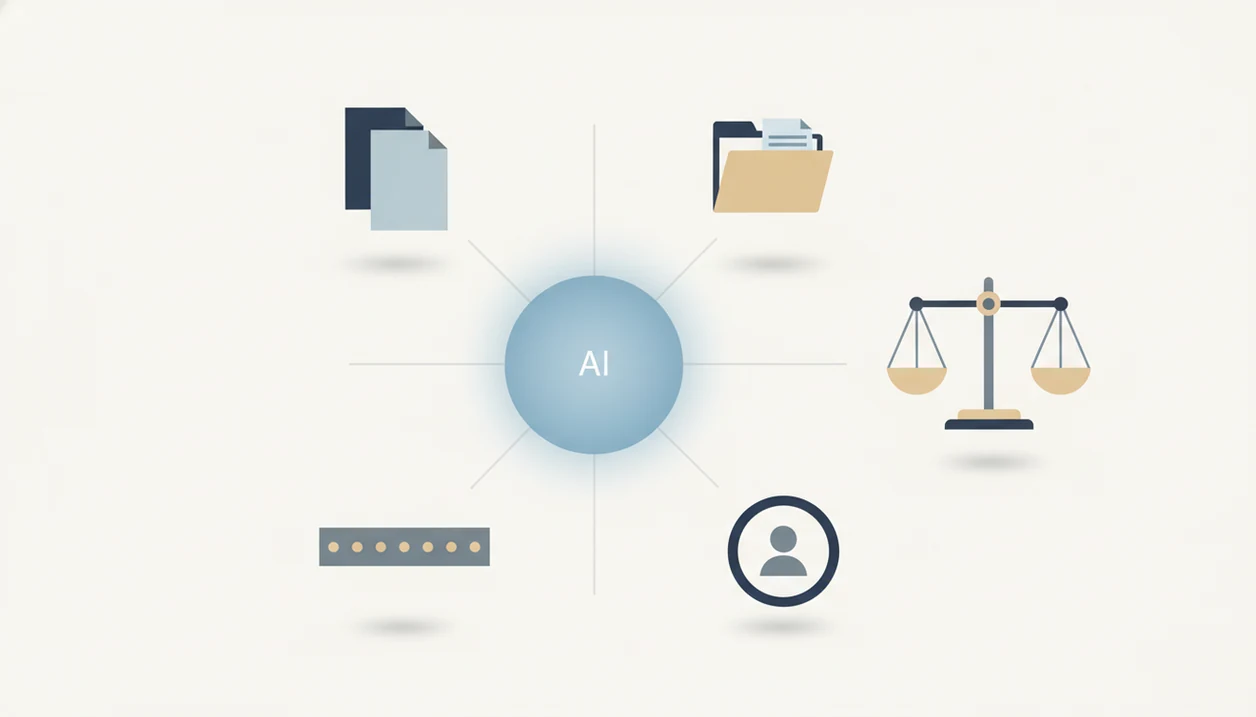
Responsible AI detection uses the score as one review signal alongside drafts, version history, assignment fit, voice consistency, sources, and a conversation with the writer. It should not trigger automatic penalties, publication rejection, hiring decisions, or compliance action by itself.
Use AI detector uncertainty this way:
- Collect the score without treating it as a verdict.
- Compare the draft with earlier writing, assignment requirements, and source quality.
- Ask the writer about their process, tools, notes, and revisions.
- Review evidence such as document history, outlines, citations, and feedback logs.
- Apply policy consistently, with room for appeal or correction.
AI detection platforms fit best when teams already have clear rules for disclosure, appeal, privacy, and revision. The safer workflow is to document the score, review supporting evidence, and give the writer a chance to explain their process before any penalty or publication decision.
When to Escalate an AI Detector Result
Escalate an AI detector result whenever the outcome could affect someone’s grade, job, publication record, or formal standing. High-stakes cases need a human review path before penalties, dismissal, rejection, or academic misconduct findings.
Use escalation to slow the process down and protect both the institution and the writer:
- Pause the decision before applying a sanction, rejecting a manuscript, closing a case, or recording misconduct based mainly on a detector score.
- Involve the right reviewer such as a teacher, editor, administrator, HR reviewer, or policy officer who understands the relevant rules.
- Preserve the record by saving drafts, timestamps, notes, sources, feedback, prompts if disclosed, and version history before anyone deletes files or overwrites evidence.
- Check privacy first before uploading student, employee, or client work into any external tool, especially when the text contains sensitive details.
- Offer a written appeal path when the score may affect a transcript, personnel file, publication decision, or other durable record.
A careful escalation process does not excuse misuse. It makes sure the decision rests on evidence, policy, and review rather than one uncertain number.
Limitations
This article explains AI detector limitations, but it cannot determine whether one specific student, writer, or employee used AI. That question needs context, records, policy, and human judgment.
- Detector accuracy changes as AI models, detector models, and humanizer methods change.
- Published statistics may not match a specific detector, institution, language, writing domain, or document length.
- Research benchmarks may use artificial prompts or controlled datasets that differ from real submissions.
- False-positive and false-negative rates are context-dependent, not universal constants.
- A detector result can be useful for triage, but it should not replace due process.
- Clean writing, grammar checking, or non-native English patterns should not be treated as proof.
- Privacy also matters when pasting student or client drafts into any tool; review AI writing app privacy before uploading sensitive work.
FAQ
Are AI detectors accurate?
AI detector accuracy varies by tool, text type, model, language, document length, and editing level. A score is an estimate, not a proof of authorship.
Can AI detectors be wrong?
Yes. AI detectors can produce false positives and false negatives.
Do AI detectors prove cheating?
No. Detector scores cannot prove misconduct without supporting evidence such as drafts, version history, source checks, and policy review.
What is a false positive in AI detection?
A false positive is human-written text being flagged as AI-generated. It is one of the most serious AI detection caveats.
What is a false negative in AI detection?
A false negative is AI-generated text being missed or labeled human. It can happen after editing, paraphrasing, translation, or mixed human-AI writing.
Why would human writing be flagged as AI-generated?
Polished, predictable, grammar-assisted, academic, or formulaic writing can resemble AI-like statistical patterns. Non-native English writing may also be affected.
Can edited AI writing avoid detection?
Edited AI writing can reduce detector confidence. Paraphrasing, human revision, and humanizer tools can make AI-generated text harder to identify.
Are short texts harder for AI detectors to judge?
Yes. Short texts give detectors less evidence, which usually increases uncertainty.
Should teachers trust AI detector scores?
Teachers should treat scores as review signals only. They should also consider drafts, writing history, assignment fit, sources, and student discussion.
Do all AI detectors give the same result?
No. Detectors can disagree because they use different models, datasets, thresholds, scoring labels, and update schedules.