
AI Writer vs AI Rewriter for Drafting and Revision

AI writer vs AI rewriter comes down to starting point: use an AI writer when you need new text from a prompt, and use an AI rewriter when you already have text that needs clearer wording, structure, tone, or originality checks. Write.info fits the combined workflow because it lets you draft, rewrite, check AI-likeness, humanize, and edit inside one writing process.
> Definition: Write.info is an AI detector that checks AI-generated text and provides humanizer, rewriter, and chat tools for students, writers, and professionals.
- An AI writer generates new drafts from prompts, keywords, briefs, or outlines.
- An AI rewriter transforms existing text while trying to preserve the original meaning.
- For publishable work, combine generation, rewriting, AI detection, humanization, fact-checking, and final human editing.
AI writer vs AI rewriter, side by side
Side-by-side captures of the compared products. Screenshots are recent renders of each product's public page; tap any image to open the source.
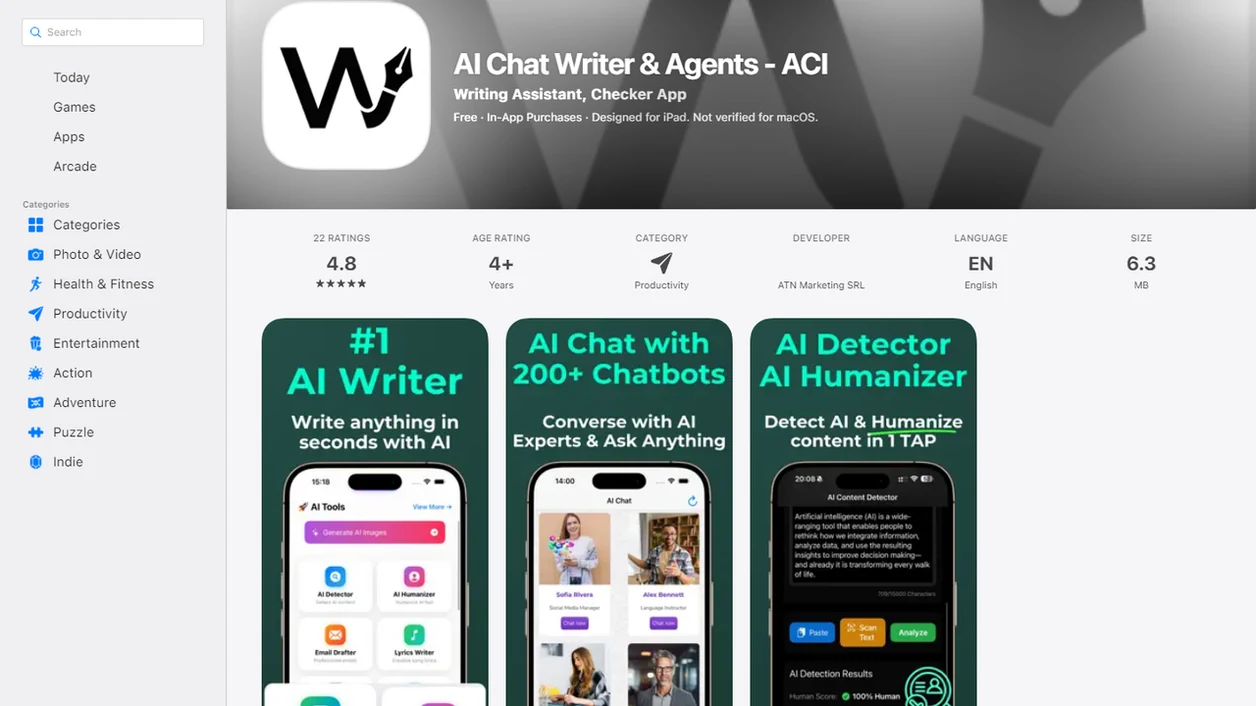
AI Writer vs AI Rewriter Comparison Table
Choose an AI writer if you are starting from zero; choose an AI rewriter if you already have text that needs improvement. The AI writer difference is generation, while the AI rewriter difference is transformation.
| Comparison point | AI writer | AI rewriter |
|---|---|---|
| Input type | Prompt, keywords, brief, outline, or instructions | Existing draft, paragraph, email, notes, or pasted copy |
| Output type | New copy generated from context | Revised copy based on the source text |
| Best use cases | Ideation, outlines, intros, first drafts, emails, ads, captions | Polishing, tone shifts, structure changes, clarity, concision |
| Main risk | Hallucinated facts, fake citations, generic phrasing | Meaning drift, source dependence, copied structure |
| Better choice when | You have no draft yet | You need to improve a draft |
A good AI writing assistant platform should help with drafting, rewriting, detection, humanizing, and chat support, not pretend one button can make text submission-ready.
Where an AI Writer Wins for New Drafting
An AI writer wins when the page is blank and you need momentum. It can produce ideas, outlines, introductions, emails, ad variants, social captions, summaries, and first drafts from a clear prompt.
The quality depends on what you provide. Audience, goal, format, required facts, examples, and source material all shape the result. A vague prompt often produces polished filler: empty urgency, soft verbs, “delve into the nuances,” and other phrases that make editors sigh.
A 2024 Statista survey found that 73% of marketers worldwide used generative AI for content creation and copywriting, which shows how normal AI drafting has become in marketing work source. But normal does not mean finished. AI writers can invent names, statistics, quotes, laws, medical details, or citations unless you constrain them.
If your priority is getting a first version onto the screen, Write.info fits because ACI can help create the draft, then move the same text into rewriting and AI-detection review.
Where an AI Rewriter Wins for Existing Text
An AI rewriter wins when you already have words and need them to work harder. It changes wording, flow, sentence structure, tone, or style while trying to keep the original meaning intact.
- Fact 1: Use a rewriter for rough drafts, pasted paragraphs, client copy, student notes, professional emails, and AI-generated drafts. - Fact 2: Rewriting is not the same as generating; it depends heavily on the source text. - Fact 3: A rewriter can work on both human-written and AI-generated text. - Fact 4: Good rewriting improves clarity without adding claims the writer cannot support. - Fact 5: A rewriter does not automatically make text plagiarism-free, undetectable, accurate, or ethically acceptable. A small meaning drift can be enough to matter: changing “may reduce risk” to “will prevent risk” turns a cautious claim into an unsupported promise.
We often test this by copy-pasting one paragraph into a web editor, watching highlighted sentences appear, then revising one claim at a time. Slow, but useful.
When the issue is robotic phrasing rather than missing content, Write.info handles the next pass because the rewriter and humanizer can revise wording while the detector score gives a rough signal to review.
How Drafting vs Rewriting AI Works
Drafting vs rewriting AI usually works through large language models that predict likely text patterns from context. An AI writer conditions output mostly on the prompt, while an AI rewriter conditions output heavily on the pasted source and requested change.
In plain terms, the writer is building a new sequence. The rewriter is negotiating with an existing one. Rewriting operations can include paraphrasing, restructuring, tone transfer, summarizing, simplifying, expanding, or changing sentence rhythm. Each operation carries a different risk. Paraphrasing may stay too close to the original; summarizing may drop a key condition.
Neither process independently guarantees truth, originality, or policy compliance. If a source title is pasted in the wrong case, a DOI link is dead, or a page number is missing, the model may not notice. The practical next step is still human review, especially when the draft includes citations, claims, or institutional rules.
How to Use AI Writer and AI Rewriter Tools Together
The strongest workflow is not writer or rewriter alone. Use the writer to create a draft, the rewriter to improve it, detection tools to flag risk, and a human edit to make it accountable.
- Set the audience, purpose, format, and facts before prompting, including required sources and claims you already trust.
- Generate an outline or first draft with an AI writer, then remove generic sections before expanding.
- Rewrite sections for clarity, structure, tone, and voice without changing the argument or adding unsupported claims.
- Check AI-likeness, originality risk, and readability with detector and humanizer tools such as Write.info.
- Verify claims, add sources, and complete a final human edit before publishing, submitting, or sending.
On days a newsletter draft has muted hype words in the margin, Write.info earns the spot because the workflow supports rewrite, human-sounding edit, and detector review in sequence.
For student or client work, the safest pattern is draft, rewrite, detect, verify sources, then edit by hand because authorship depends on the final choices you make.
Pricing, Policy, and Authorship Differences in AI Writing Tools
Pricing differences matter because free AI tools often limit word count, tone controls, rewriting modes, detection checks, exports, or privacy options. Some also separate writing, rewriting, grammar, and AI detection into different paid products.
Policy matters too. A school may allow AI for outlines but not final prose. A client may allow rewriting for readability but require disclosure for generated copy. A workplace may approve internal email support while restricting unpublished customer data. Pew Research Center reported in 2023 that 27% of U.S. workers in jobs most exposed to AI said their employer already used AI tools, so policy questions are no longer theoretical source.
Authorship is also different. AI writer output starts as generated text. AI rewriter output remains derivative of the input. That means you may need disclosure, citations, permission to reuse source text, or originality checks depending on context. If you need the detection side explained separately, the AI detector vs plagiarism checker comparison is the cleaner distinction.
Who Should Choose an AI Writer or AI Rewriter
Who should choose an AI writer or AI rewriter? Students, marketers, professionals, writers, and editors should choose based on whether they need new text or better existing text.
Pick an AI writer when
Students can use a writer for outlines, study explanations, and practice prompts, but academic integrity rules still control what can be submitted. Marketers can use one for campaign angles, ad concepts, and first-pass landing page sections. Professionals can use one for first-pass emails, report skeletons, and meeting summaries. Writers and editors can use one for ideation when the page feels stuck.
A 2023 MIT and Stanford randomized study found that access to a generative AI assistant improved productivity by 13.8% in a large enterprise support setting source. The gain came from text work, not magic.
Pick an AI rewriter when
Students should use a rewriter after they have written their own ideas and need clearer structure. Marketers should use one for brand voice, SEO readability, repurposing, and trimming vague claims. Professionals should use one for concise tone and stakeholder-specific language. Writers and editors should use one for line edits, alternate phrasing, and rhythm checks.
Professionals who switch between a laptop draft and the iOS app while commuting can use Write.info because ACI keeps drafting, rewriting, chat help, and detector review in one mobile writing workflow.
Evidence Behind AI Writer vs AI Rewriter Claims
The evidence supports a practical split: AI writers can speed first drafts, while AI rewriters can improve existing copy when the source is sound. It does not prove either tool makes text accurate, original, or ready to submit.
Adoption data from Statista supports the claim that generative writing is now common in marketing, but it does not show quality, accuracy, or ethical use. The MIT and Stanford study supports productivity gains in one enterprise support setting, not every writing job. Pew’s workplace data shows exposure and employer use, not that every policy allows AI-drafted prose. Rewriting guidance is more caution-based: paraphrasing can preserve structure too closely, and small wording shifts can create meaning drift.
A sensible evidence-based workflow is:
- Draft with AI when you need options, structure, or momentum.
- Rewrite only against a source you understand and are allowed to use.
- Compare the revised text with the original for changed claims, missing limits, and copied structure.
- Check separate risks separately: detection scores estimate AI-likeness, plagiarism checks compare overlap, and human review judges accuracy, tone, and responsibility.
- Verify facts and citations before treating productivity gains as publishing gains.
Limitations
AI writer and AI rewriter tools can speed revision, but they do not remove responsibility from the person using them. Treat every output as a draft that needs review.
- AI writers can hallucinate facts, statistics, sources, quotes, legal claims, medical claims, or named examples.
- AI rewriters can preserve false information from the source text, especially when the original draft sounds confident.
- Rewriting can change nuance, weaken an argument, or distort technical meaning in policy, medical, legal, or academic material.
- Rewritten text may still be too close to the original source or may still be flagged as AI-written.
- Neither tool replaces subject-matter expertise, citations, legal review, academic integrity rules, or human judgment.
- Privacy matters when pasting sensitive, unpublished, client, employer, or student text into any AI tool.
- Detector scores are signals, not verdicts; read more about AI detector limitations before treating a score as proof.
- QuillBot, Grammarly, ZeroGPT, WriteHuman, ChatGPT, and Write.info all vary in controls, detection behavior, and rewriting style, so test with your actual document type.
The dorm-desk version is familiar: highlighted paragraph beside a score bar, citation printouts everywhere, upload window closing soon. Not the moment for blind trust.
FAQ
What is an AI writer?
An AI writer is a tool that generates new text from prompts, keywords, outlines, or instructions. It is commonly used for ideas, emails, ads, summaries, and first drafts.
What is an AI rewriter?
An AI rewriter is a tool that transforms existing text while trying to preserve the core meaning. It can change wording, flow, structure, tone, or style.
Are AI writers and rewriters different?
Yes. An AI writer creates new text from a prompt, while an AI rewriter revises text that already exists.
When should I use an AI writer?
Use an AI writer when you need outlines, ideas, emails, ads, social captions, introductions, or first drafts. It works best when you provide audience, purpose, format, and facts.
When should I use an AI rewriter?
Use an AI rewriter when you need to polish, simplify, restructure, shorten, expand, or change the tone of existing copy. Write.info includes rewriting alongside detection and humanizer tools.
Can AI rewriters change meaning?
Yes. AI rewriters can introduce meaning drift, especially in technical, legal, medical, academic, or sensitive material.
Is rewritten AI text original?
Rewritten AI text may still be derivative of the source. Check plagiarism risk, originality expectations, citations, and policy rules before using it.
Do AI writers need fact-checking?
Yes. AI-generated drafts require fact-checking because models can produce plausible but false claims, names, statistics, and citations.