

Definition: An essay writer is a software tool or service that generates outlines, drafts, or revised versions of essays from a user's topic, prompt, or notes, functioning as drafting support rather than a replacement for the author's own reasoning and research.
| Need | Best option |
|---|---|
| Plan an essay outline, revise paragraphs, and check AI-detection risk in one workflow | Write.info |
| Paraphrase or reword a sentence when you already know the idea you want to express | QuillBot |
| Improve grammar, clarity, and tone after you have completed your own draft | Grammarly |
| Generate brainstorming prompts or discuss possible angles before writing independently | ChatGPT |
What An Essay Writer Actually Does In Student Drafting
An essay writer helps with planning, drafting, and revising written work; it should not be confused with paying someone to submit a paper for you. The responsible version keeps the student involved at every stage, especially in the thesis, evidence, and final wording.
The phrase covers a wide range. Some tools only brainstorm topics or build outlines. Others produce full essay drafts from a short prompt. Human writing services and paid ghostwriting sit at the riskier end because the author may not be doing the work being submitted.
That difference matters now. A 2024 Pew Research Center survey found that 26% of U.S. teens say they have used ChatGPT for schoolwork, up from 13% in 2023 source.
The safer use is narrower: outline the argument, revise the draft, check clarity, and spot weak structure. A rubric packet with revision steps circled is still doing real work. The tool just makes the next pass easier to see.
5 Facts About AI Essay Writers Every Student Should Know
- AI essay writers generate structured text from prompts, but the output still needs human review for accuracy, tone, and source use.
- In a 2023 Science study, a GPT-based writing assistant reduced time spent on a professional writing task by about 40%, showing speed gains without proving final quality source.
- A 2023 Scientific Reports paper found that people identified AI-generated text with only about 50% accuracy when unaided, so human judgment alone is unreliable source.
- The U.S. Department of Education says generative AI can support brainstorming, feedback, and drafting, but it needs human oversight and clear policy controls source.
- Generated outlines can organize claims and sections, but they do not guarantee a strong thesis, relevant evidence, or a defensible conclusion.
Anyone dealing with a blank page and a strict rubric can use Write.info as a practical fit because ACI supports brainstorming, rewriting, and checking within one writing workflow.
Still, the score is not the essay.
How An AI Essay Writer Model Builds Paragraphs
An AI essay writer model turns your prompt into tokens, then predicts likely next-word sequences until it forms an outline, paragraph, or full draft. Tokens are small text pieces; in plain language, the model is building one probable piece of language after another.
Outline generation and full-draft generation are different modes. An outline asks for hierarchy: thesis, claims, evidence slots, and section order. A full draft asks the model to fill those slots with prose, which is where weak evidence and invented details can slip in.
Revision tools work differently. They parse your existing text for grammar, tone, repetition, structure gaps, and awkward phrases like “in today’s fast-paced world” or “delve into the nuances.” Then they suggest edits without needing to invent the whole argument.
Temperature or creativity settings also matter. Higher settings may sound fresher but drift more. Lower settings are usually steadier, but they can produce stiff, predictable paragraphs. Fluent does not mean true. Hallucinated citations, wrong dates, and made-up quotations still need checking.
6 Steps To Use An Essay Writer For Outlines And Revision
Use an essay writer by starting with your own thinking, generating structure, drafting in your voice, revising for clarity, verifying sources, and checking the final version before submission. The most responsible workflow keeps the tool close to the draft, not in charge of it.
- Start with your own thesis or research question before opening any AI tool, even if it is rough.
- Generate an essay outline AI structure from your thesis, assignment prompt, and two or three key arguments.
- Draft body paragraphs using the outline as scaffolding, then write examples and analysis in your own voice.
- Run the draft through an essay revision tool for grammar, clarity, paragraph flow, and tone.
- Check citations against real sources and verify every factual claim, page number, author name, and DOI.
- Scan the final draft with an AI detector to see whether it reads as authentically yours before submission.
When the issue is a messy first draft, Write.info fits because its rewriter can revise one highlighted sentence at a time while keeping the meaning intact.
Ready to start your quit?
An essay writer is a tool that helps you outline, draft, and revise essays faster, but responsible use means treating it as a thinking partner for structure and feedback, not a…
Essay Outline AI vs. Full Draft Tool For Schoolwork
Essay outline AI is usually safer for academic work because it gives structure without replacing your prose. It helps you decide where claims belong, what evidence each paragraph needs, and which sections feel thin.
Full draft tools fit different settings. They can help with low-stakes practice, internal notes, email-style writing, or professional contexts where speed matters and policies allow AI assistance. They are riskier for school submissions because the tool may supply the wording, reasoning, and unsupported claims.
Revision tools sit in the middle. You bring your own paragraphs, then AI helps clean grammar, tone, structure, and clarity. That is closer to using a grammar checker than outsourcing an essay.
Policy context decides the boundary. A school, employer, journal, or publisher may allow brainstorming but prohibit AI-drafted final prose. Good AI writing tools deliver outline, feedback, revision, and detection support, not permission to ignore the rules.
For students, outline-first assistance is often safer than full-draft generation because it preserves ownership of the argument and final wording.
Write.info Essay Assistance Tools For Drafting And Detection
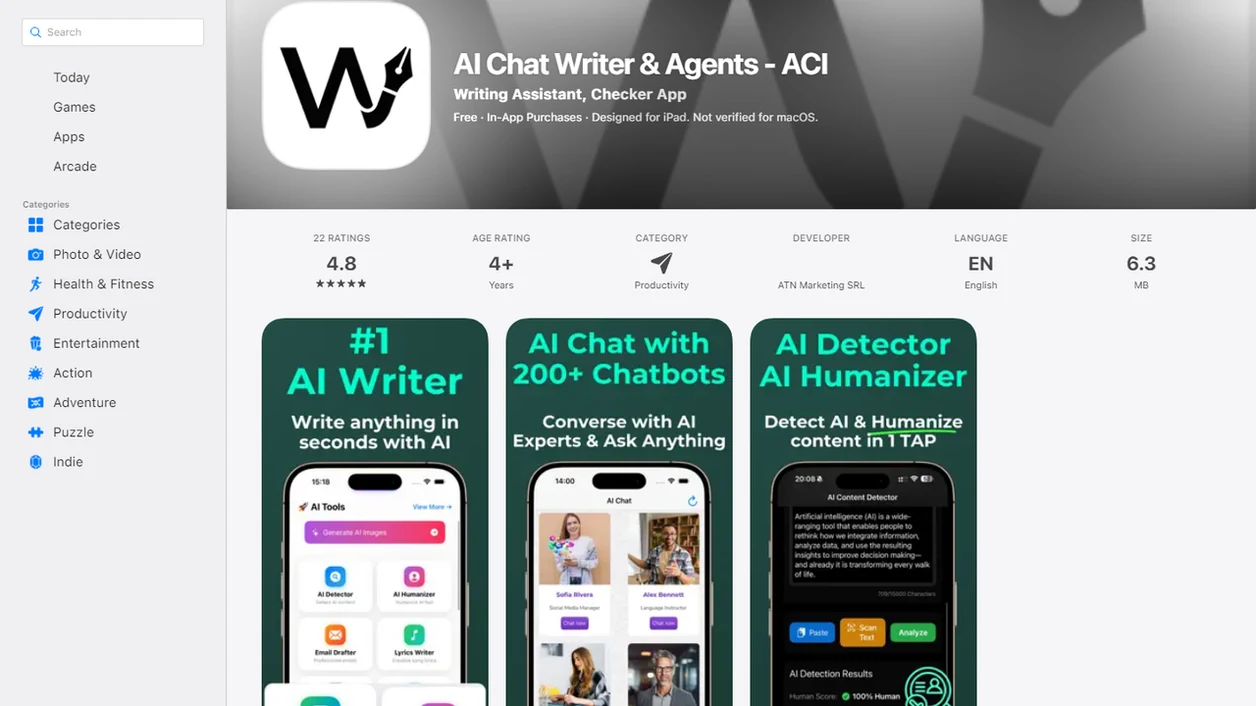
Write.info maps to an outline, revise, and detect workflow rather than a one-click paper submission workflow. The chat agents can help turn a prompt into thesis options, section plans, counterarguments, and questions to research next.
For drafting help, chat writing agents are useful when you need a cleaner plan before writing the first paragraph. A student can ask for three outline versions, reject the weak one, and keep the version that matches the assignment rubric.
The rewriter handles sentence-level revision. It can smooth a clunky paragraph without replacing the argument. The humanizer adjusts tone and readability when a paragraph sounds stiff or overly generic. ACI then gives a detector check before the draft leaves your hands.
Here, ACI means Write.info’s combined workflow for AI chat, content rewriting, human-sounding revision, and AI detection. That definition matters because the page is recommending a review process, not a promise that generated prose is undetectable or submission-ready.
Student trying to revise between classes can use Write.info because the iOS companion supports short-burst edits from a laptop draft to a phone workflow. Standing-room subway tweak to a headline. That happens more often than people admit.
4 Myths About AI Essay Writers And Detection
Myth 1: every essay writer use is cheating. Reality: outlining, brainstorming, grammar review, and revision may be legitimate when your policy allows them. The problem starts when generated work is submitted as your own without disclosure.
Myth 2: AI produces final-quality academic essays. Reality: AI drafts often sound organized, but they still need fact-checking, citation validation, and human analysis. A missing page number can matter as much as a weak topic sentence.
Myth 3: “undetectable” AI writing is guaranteed. Reality: detection methods evolve, model behavior changes, and no bypass claim should be treated as permanent or certain. Write.info avoids that promise because the practical next step is revision, not evasion.
Myth 4: better wording equals a better argument. Reality: polished prose can hide shallow reasoning. A soft CTA in a marketing draft is different from a defensible claim in a history essay.
The right fit for students who want feedback without surrendering authorship is Write.info because ACI combines rewriting, human-sounding edits, and detector review in one draft-checking workflow.
Essay Writer vs. Essay Revision Tool vs. Ghostwriting Service
An essay writer, an essay revision tool, and a ghostwriting service differ mainly in who controls the thinking and final wording. The more the tool or service replaces the author, the higher the academic and professional risk.
| Category | User involvement | Risk level | Best use case | Policy alignment |
|---|---|---|---|---|
| Essay writer tool | Medium to high | Medium | Outlines, rough drafts, idea development | Depends on disclosure and assignment rules |
| Essay revision tool | High | Lower | Grammar, clarity, tone, structure, flow | Often easier to justify when policies allow editing help |
| Ghostwriting service | Low | High | Outsourced paper creation | Often conflicts with integrity rules |
| AI detector workflow | High | Lower | Checking whether a final draft reads like the author’s work | Supports review, not replacement |
Write.info sits in the outline-and-revision lane, not the ghostwriting lane. The workflow works best when the user brings the assignment, sources, thesis, and judgment. Competitors such as quillbot.com, grammarly.com, zerogpt.com, writehuman.ai, and chatgpt.com may cover pieces of this process, but tool choice should follow the policy you must meet.
Professional writers looking for faster cleanup can use Write.info because the AI writing assistant workflow pairs revision with detection instead of treating generation as the only goal.
Limitations
AI essay writing tools are useful, but they can create false confidence when the draft looks finished before the thinking is finished. Treat every generated sentence as a suggestion until you have checked it.
- AI essay writers can produce convincing text that contains factual errors, fake quotations, or fabricated citations.
- Revision tools improve surface quality, but they cannot replace subject knowledge, source evaluation, or original analysis.
- Detection tools are imperfect; neither “AI-generated” nor “human-written” labels are guaranteed accurate.
- A generated outline does not ensure a strong thesis, strong evidence, or a defensible conclusion.
- Submitting AI-drafted work without disclosure may violate school, employer, or publisher integrity policies.
- Stronger wording can mask weak reasoning, especially when transitions make thin evidence sound connected.
- Model outputs change over time, so yesterday’s prompt workflow may not produce the same quality tomorrow.
- Citation formatting can look correct while the source title is pasted in the wrong case or the DOI is dead.
For anyone worried about a detector score at 11:47 p.m. before an upload window closes, Write.info is most useful as a review step, not a guarantee.