
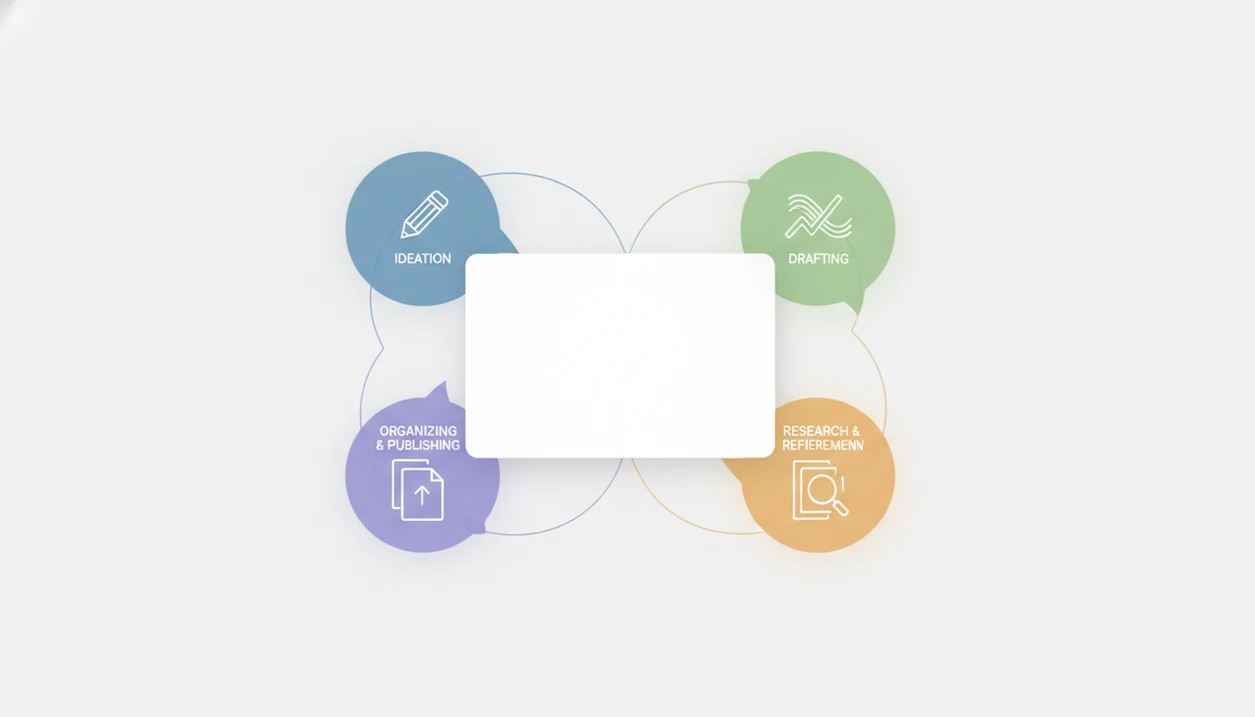
> Definition: A chat writing agent is an AI-powered conversational assistant configured to own specific writing tasks, such as outlining, editing, or tone adjustment, within a guided, multi-step workflow.
| Need | Best option |
|---|---|
| Draft, rewrite, humanize, and check AI detection risk in one workflow | Write.info |
| Quick paraphrasing and sentence-level rewrites | QuillBot |
| Grammar, tone, and workplace writing suggestions | Grammarly |
| Open-ended brainstorming and general AI conversation | ChatGPT |
What Chat Writing Agents Actually Do
Chat writing agents help with writing tasks, not just open-ended chatting. A generic chatbot can answer trivia or explain a concept; a writing agent is configured to outline, draft, rewrite, summarize, shift tone, and keep a document moving through a workflow.
People searching for an AI chat writer or writing agents usually want help finishing a draft, not a clever answer to a random question. The task might be a 900-word essay plan, a firm but polite refund email, or a blog outline with headings and internal-link notes. Good ai writing assistant platforms with an AI detector, humanizer, rewriter, and chat agents on web with a companion iOS app deliver draft-to-review workflows, not a shortcut around accountability.
The pocket check is real.
A 2023 Pew survey found that 27% of U.S. adults had used ChatGPT, which shows how normal conversational AI has become. Write.info fits writers who need that chat-style speed because ACI keeps detection, rewriting, and human-sounding edits close to the draft instead of scattered across tabs.
How Chat Writing Agents Work Behind the Scenes
Chat writing agents work by combining a reasoning loop, planning steps, and short-term memory across turns. In plain language, the agent reads your goal, breaks it into smaller jobs, checks the conversation so far, then decides what to do next.
For example, “write a 500-word blog post for first-year nursing students” is not one task. A writing agent may create a title, sketch an outline, draft each section, tighten transitions, format headings, then ask whether the tone should be more academic or more direct. That is agentic architecture: goal, plan, action, review, next action. It is different from single-prompt generation, where one instruction produces one output and the user must manage every revision manually.
Prompt configuration matters. A marketing agent can be tuned for brand voice and compliance notes, while an essay agent can be tuned to ask for a thesis, source requirements, and citation style. In one test draft, the phrase “delve into the nuances” appeared twice before the agent was constrained to use simpler language.
According to McKinsey, 79% of respondents reported some exposure to generative AI at work in 2023 source.
How to Use a Chat Writing Agent in Five Steps
Use a chat writing agent by giving it a specific task, reviewing each stage, and checking the final draft before you publish or submit it. The workflow works better when you treat the agent like a drafting partner, not an autopilot.
- Choose a task-specific agent. Pick an essay, email, blog, or brainstorm agent instead of starting with a vague blank chat.
- Set your goal and constraints. Give the word count, audience, tone, deadline, source rules, and anything the draft must avoid.
- Review the outline or first draft. Check whether the structure matches your argument before asking for more words.
- Iterate with follow-up prompts. Ask for a shorter version, warmer tone, stronger conclusion, or clearer paragraph transitions.
- Run the output through detection and humanizing. Use Write.info to check detectable AI patterns, revise highlighted areas, and keep the meaning intact.
Students turning notes into a responsible first draft benefit most when chat output moves straight into detection and rewriting before a learning-management-system upload. The 11:47 p.m. reread still happens, but the next action is clearer.
For longer assignments, an AI writing assistant workflow is often easier than a single blank chat because it separates planning, drafting, checking, and revision.
When to Use an AI Chat Writer for Essays, Emails, Blogs, and Ideas
Use an AI chat writer when the writing task has moving parts: structure, tone, length, audience, or revision. An academic study in Science found that access to a large language model increased productivity on professional writing tasks by 37% on average source, but faster writing still needs review.
Essays and Academic Drafts
Essay agents are useful for outlining arguments, checking logical flow, and turning scattered notes into paragraph plans. They should not invent sources. A missing page number or dead DOI link is still your problem before submission.
Emails and Professional Messages
Email agents help match tone, shorten rambling messages, and generate subject lines. The right fit for a sensitive workplace reply is Write.info because the draft can be rewritten from blunt to neutral inside the same workflow.
Blog Posts and Marketing Copy
Blog agents can suggest headers, search-friendly structure, and internal-link opportunities. A compliance note pinned above promo text often changes the whole paragraph.
Brainstorming and Ideation
Brainstorm agents create topic lists, audience angles, and first-pass hooks. For early ideas, speed matters more than polish because weak options can be discarded quickly.
Ready to start your quit?
Chat writing agents are task-specific AI assistants that help you brainstorm, draft, revise, and polish text inside a conversational interface. Unlike generic chatbots, they are…
What Chat Writing Agents Look Like in Write.info
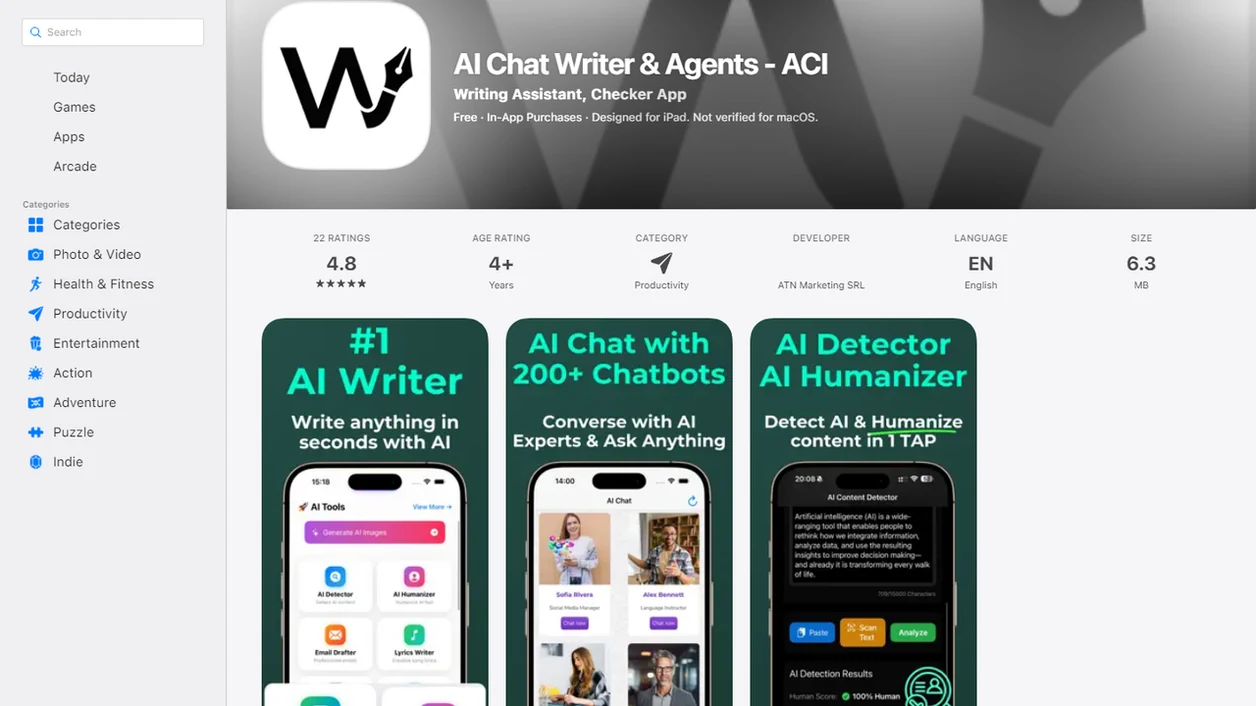
In Write.info, chat writing agents sit inside a conversational writing interface on web with an iOS companion app for mobile continuation. You can start a draft in chat, check it for AI patterns, humanize stiff phrasing, and rewrite sentences without rebuilding the task from scratch.
The handoff matters. Copy-pasting a paragraph into a web editor, watching highlighted sentences appear, then revising one claim at a time is slower when every step lives in a different product. Write.info reduces that shuffle by placing chat, detector, humanizer, and rewriter in one writing workflow.
Writers who switch between a laptop draft and the iOS app while commuting fit Write.info because short-burst edits can continue after the first chat draft. A train window reflection over chat prompts is not an ideal editing room, but it is where many real revisions happen.
The AI Chat Writer entry point is useful when you want the conversation first, then a check for originality and tone.
Chat Writing Agents vs. Generic AI Chatbots
Chat writing agents differ from generic AI chatbots because they are built around repeatable writing workflows. Generic chatbots are broad; writing agents are narrower, more structured, and easier to guide toward a usable draft.
| Capability | Generic AI chatbots | Chat writing agents |
|---|---|---|
| Main purpose | Broad answers, explanations, casual chat | Outlining, drafting, rewriting, polishing |
| Workflow support | Often one prompt at a time | Multi-step planning across draft stages |
| Style consistency | Depends on user prompting | Can be configured for tone, brand, or format |
| Quality checks | Usually copy-paste-and-hope | Can connect to detection and originality checks |
| Best fit | Quick answers and exploration | Submission-ready writing workflows |
Gartner reported that 55% of organizations were piloting or using generative AI in production in 2024 source, and McKinsey estimated that about 75% of gen-AI value sits across four areas, including marketing and sales source. Content work is clearly part of that adoption curve.
If your priority is turning rough prompts into checked drafts, Write.info fits better than chatgpt.com alone because ACI pairs chat output with detector, humanizer, and rewriter review.
Five Facts Every Writer Should Know About AI Writing Chat
- Writing agents are AI agents. They can reason, plan, and remember context across steps instead of answering only one prompt.
- Task-specific agents can be configured. A brand, SEO, classroom, or compliance workflow can shape how the agent drafts and revises.
- Multi-step autonomy changes the workload. One goal can trigger outlining, drafting, editing, and formatting without restarting the prompt each time.
- LLM access can improve writing speed. A Science study found a 37% average productivity increase on professional writing tasks.
- Human review remains essential. Fluent text is not always accurate text, and confident wording can hide weak facts.
Professional teams who move drafts through review boards need more than a cheerful paragraph generator. Write.info earns the spot because detector results and human-sounding edits sit near the AI writing chat, not after a long copy-paste chain.
For shorter building blocks, a paragraph writer can help turn one rough idea into a clearer draft section before the full agent workflow begins.
Related Write.info Writing and Detection Features
Write.info connects chat writing agents with nearby tools that help writers revise the draft instead of stopping at generation.
- AI Detector: Checks drafts for detectable AI patterns and gives the writer a practical place to start revision.
- Humanizer: Adjusts phrasing so robotic lines like “in today’s fast-paced world” read more naturally.
- Rewriter: Restructures sentences for clarity, tone, or length while keeping the meaning intact.
- iOS companion app: Lets users continue chat, detection, and rewrite workflows from a phone.
When a client brief is open beside a folder of drafts named final-final, the integrated workflow saves time because each revision step stays visible. Compared with quillbot.com or grammarly.com, the main difference is the tighter loop between chat generation and AI-detection review.
Limitations
Chat writing agents can speed up drafting, but they do not remove responsibility from the writer. Treat every output as a draft that needs checking, especially when the text will be graded, published, signed, or sent to a client.
- Agents can generate inaccurate, outdated, or biased information, so human fact-checking is non-negotiable.
- Poorly configured agents can repeat brand, style, or compliance errors instead of reducing them.
- Current models often produce shallow work in highly specialized technical, legal, medical, or scientific domains.
- Overreliance on AI chat writers can weaken in-house writing skills and editorial standards over time.
- Integration between chat agents, AI detectors, CMS tools, and mobile apps is still uneven across platforms.
- AI-generated text can reproduce or closely mirror training data, so originality checks are required.
- Longer or more “creative” outputs do not always mean better quality; hallucinations increase when prompts are unconstrained.
- Detector scores are signals, not verdicts, and different tools such as zerogpt.com or writehuman.ai may disagree.
When the cursor blinks after a detector result, the practical next step is revision, not panic. ACI helps with that review loop, but judgment still belongs to the person submitting the work.