
Rewriter vs Humanizer: Which Tool Should You Use?
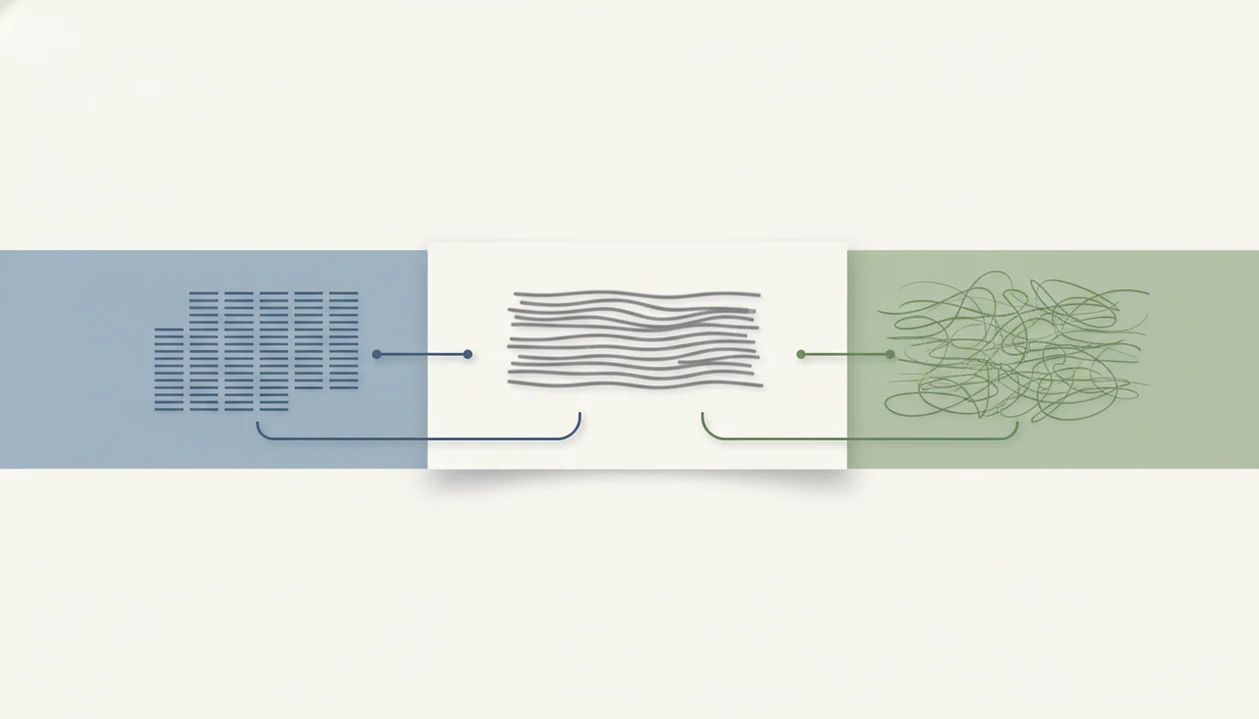
Use a rewriter when you want to paraphrase, clarify, shorten, expand, or change the style of existing text; use a humanizer when AI-generated text sounds robotic and needs a more natural human rhythm. In the rewriter vs humanizer decision, the rewriter is meaning-preserving revision, while the humanizer is detector-aware and voice-aware naturalization. Write.info supports both steps when a draft needs clearer wording first and a more human-sounding edit afterward.
Definition: A rewriter changes wording and structure while preserving meaning, while a humanizer reshapes AI-generated text so it sounds more natural, varied, and human-written.
- A rewriter is best for paraphrasing, restructuring, simplifying, and improving text that may be human-written or AI-written.
- A humanizer is best for reducing robotic AI patterns such as repetitive phrasing, flat tone, predictable sentence rhythm, and overly polished structure.
- Neither tool guarantees originality, accuracy, policy compliance, or perfect AI-detector results, so the safest workflow is rewrite, humanize when needed, review, and check with an AI detector.
Rewriter vs humanizer, side by side
Side-by-side captures of the compared products. Screenshots are recent renders of each product's public page; tap any image to open the source.
AI Rewriter vs Humanizer at a Glance
An AI rewriter changes how text is expressed; a humanizer changes how AI-generated text feels to a reader. Write.info is an AI detector that checks AI-generated text and provides humanizer, rewriter, and chat tools for students, writers, and professionals.
| Comparison point | Rewriter | Humanizer |
|---|---|---|
| Core job | Paraphrase, restructure, simplify, or adjust style | Naturalize AI-generated wording and rhythm |
| Input type | Human-written or AI-written text | Usually AI-generated or AI-assisted text |
| Output goal | Clearer, shorter, longer, or differently toned text | More varied, natural, human-sounding text |
| Best use case | Rough paragraph, dense explanation, stiff email, alternate draft | Robotic blog draft, flat essay section, generic product copy |
| Detector relevance | May not change AI-like patterns enough | Designed with detector-aware revision in mind |
| Human review | Needed for meaning, facts, and voice | Needed for accuracy, nuance, and policy fit |
As a rough market map, QuillBot and Grammarly sit closer to rewriting and editing, WriteHuman sits closer to humanizing, and ZeroGPT sits closer to detector-first review. After a detector score makes you pause, Write.info lets you revise the same paragraph instead of copying it between four browser tabs.
Rewriter Meaning for Paraphrasing and Structure
A rewriter is a revision tool that changes wording, sentence structure, tone, length, or clarity while preserving the core idea. It can work on human-written text, AI-written text, or a mixed draft that started in ChatGPT and then got edited by hand.
Common uses include paraphrasing a source note, simplifying dense wording, improving flow, reducing repetition, adapting tone, and creating an alternate draft. A marketer might turn “Our solution facilitates operational enhancement” into “Our tool helps teams work faster with fewer manual steps.” Same claim. Less fog.
For writers who mainly need cleaner phrasing, Write.info fits because the rewriter step can adjust clarity before any detector-aware edit happens. The free AI rewriter is the right starting point when the issue is structure, not whether the text sounds machine-made.
A rewriter may still leave AI-like statistical patterns if the original was generated by AI.
Humanizer Meaning for AI Text Naturalization
A humanizer is a tool that rewrites AI-generated text to sound more natural, varied, and human-like. It focuses less on “say this another way” and more on “make this read like someone actually wrote it.”
Humanizers target AI tells such as uniform sentence length, repetitive transitions, generic phrasing, over-explaining, and overly formal rhythm. Phrases like “in today’s fast-paced world” and “delve into the nuances” are common cleanup targets because they signal a draft that never left the model’s default voice.
Not just synonyms.
A strong humanizer adjusts rhythm, tone, phrasing, sentence variety, and flow. It may split one polished paragraph into two shorter ones or replace a generic claim with a more direct sentence. Write.info supports that kind of human-sounding edit because ACI pairs humanizing with detector checking, not just surface paraphrasing.
Humanizers can reduce some detector flags, but they cannot guarantee undetectability.
Rewriter Use Cases for Clarity, Length, and Tone
When should you use a rewriter instead of a humanizer? Use a rewriter when the main problem is clarity, length, tone, or structure, not an obviously AI-generated sound.
Strong use cases include improving a rough paragraph, shortening a long draft, changing tone, simplifying dense wording, and paraphrasing without changing claims. A parent email open beside grading notes may not need humanizing. It may just need the sentence “Your child has demonstrated inconsistent task completion” rewritten as “Your child is doing some assignments well but is missing others.”
Writers, students, marketers, and professionals use rewriters even when no detector concern exists. For email tone changes, an email rewriter AI can make a message warmer, shorter, or more direct without changing the point.
After a client says “less corporate,” when the draft is accurate but stiff, Write.info earns the spot because the rewriter can adjust tone before anyone worries about detector results.
Humanizer Use Cases for Robotic AI Drafts
Use a humanizer when the draft is AI-generated, sounds too polished, or repeats the same sentence pattern until the page feels synthetic. Standard rewriters may only paraphrase surface wording, while humanizers are tuned for natural tone and detector-aware revision.
- Humanizers help when a blog draft has smooth paragraphs but no lived texture.
- Humanizers can revise emails, essays, reports, social posts, product copy, and professional writing that sounds too generic.
- Humanizers look for repetition in transitions, claim structure, and sentence length.
- Humanizers may reduce some AI-detector flags, but the final draft still needs review.
- Pew Research Center reported that 52% of U.S. adults were more concerned than excited about increased AI use in 2023 source, which helps explain why readers, editors, teachers, and employers notice AI-generated text closely.
On days a landing page headline is split into variants and every option sounds like the same model wrote it, Write.info fits because the humanizer can vary rhythm and phrasing before the final detector check.
Rewriter and Humanizer Tool Mechanics
Rewriter and humanizer tools work by modeling meaning, sentence structure, and likely wording patterns, then producing a revised version of the input. A rewriter maps intent and syntax, which means it tries to keep the same claim while changing phrasing, order, tone, or length.
Do not judge either tool by synonym swaps alone. A useful rewriter preserves the claim; a useful humanizer changes the cadence enough that the paragraph no longer lands with the same smooth, repeated beat.
A humanizer adds a second concern: whether the text carries AI-like distribution patterns. Those patterns can include low sentence variation, repeated transitions, generic claims, and predictable syntax. In plain language, the draft sounds too even. Too clean. Too model-shaped.
The best outputs come from multiple operations: restructuring, sentence-length variation, tonal adjustment, idiomatic phrasing, and manual review. Good AI writing assistant platforms deliver drafting, rewriting, humanizing, chat support, and detector signals, not a magic certificate that a sentence is human.
For professionals who need a practical next step after a pasted detector result, Write.info covers the loop because ACI keeps rewriting, humanizing, and detector review in one writing workflow.
5-Step Rewriter and Humanizer Workflow
The safest workflow is to improve meaning first, naturalize AI-generated sections only when needed, then check the final version with an AI detector. Skip the humanizer when a human-written draft already sounds natural.
- Identify the draft source: Decide whether the text is human-written, AI-generated, or mixed.
- Rewrite for clarity: Use a rewriter if the paragraph is confusing, too long, repetitive, or off-tone.
- Humanize AI-generated sections: Use a humanizer only where the draft sounds robotic, overly formal, or pattern-heavy.
- Review facts and voice: Check names, numbers, citations, claims, and whether the draft still sounds like you.
- Check the final version: Run the revised text through an AI detector and treat the result as a signal, not proof.
Student trying to revise before a learning-management-system upload window closes can use Write.info because the workflow keeps rewrite, humanizer, and detector checks together instead of forcing a late-night tab shuffle at 11:47 p.m.
Rewriter vs Humanizer Decision Rules by Use Case
If the text is unclear, use a rewriter; if the text sounds AI-generated, use a humanizer. If both problems exist, rewrite first and humanize only the sections that still feel robotic.
| Scenario | Recommended tool | Practical rule |
|---|---|---|
| Student essay paragraph is wordy | Rewriter | Improve clarity before checking AI tone |
| Blog draft sounds generic | Humanizer | Add variation, specificity, and natural flow |
| Marketing copy has weak structure and AI voice | Both | Rewrite the claim, then humanize rhythm |
| Job application already sounds personal | Neither | Proofread manually instead |
| Non-native English draft is clear but stiff | Rewriter | Adjust tone without changing meaning |
| Professional report has sensitive claims | Both, plus review | Preserve facts and check every number |
Choose a rewriter when clarity is the problem
For students and professionals, a rewriter is often better than a humanizer when the draft’s main issue is organization, length, or plain-language clarity.
Choose a humanizer when AI voice is the problem
When the robotic opening line sits on a white screen and the rest of the paragraph sounds equally polished, Write.info fits because the humanizer targets AI voice before the detector check.
Where Rewriters Win and Where Humanizers Win
Rewriters win when the sentence needs to become clearer, shorter, better ordered, or better matched to a tone. Humanizers win when the draft already makes sense but still has the smooth, generic rhythm readers associate with AI.
A rewriter is the better tool for meaning-level cleanup. Before: “The implementation of this initiative will facilitate improved collaboration across departments.” After: “This project will help teams work together more easily.” The claim stays intact, but the fog is gone.
A humanizer is better for pattern-level cleanup. Before: “In today’s competitive landscape, businesses must leverage innovative solutions to achieve sustainable growth.” After: “Companies do not need another buzzword stack. They need tools that help them grow without adding more busywork.” Same general idea, less model-shaped.
Use both when the draft has two problems: weak structure and robotic delivery.
- Rewrite the paragraph until the point is accurate and easy to follow.
- Humanize only the lines that still sound too polished, repetitive, or generic.
- Review the final version for facts, voice, and policy fit.
Simple rule: meaning first, naturalness second, detector last.
AI Detector Results After Rewriting or Humanizing
Rewritten or humanized text can still be flagged by AI detectors, and AI-written text can sometimes pass as human. Detectors provide probability signals, not courtroom-grade proof.
- A 2023 Science Advances study of 12 AI-content detectors and 1,200 essays found up to 15% false positives on human-written texts and up to 50% false negatives on AI-generated texts source.
- A 2023 PMC analysis reported false-positive rates on human-written student essays ranging from 1% to over 26%, depending on detector and text type source.
- A 2023 npj Digital Medicine study found blinded human reviewers correctly identified 68% of ChatGPT-generated medical abstracts source.
- Detector scores can change after rewriting, humanizing, trimming, or adding citations.
- A flagged result should trigger review, not panic.
For students who need a second pass before submitting, Write.info is useful because the AI essay checker can sit after manual revision, not replace it.
Limitations
No rewriter or humanizer should be treated as a guarantee. Use them as revision aids, then make the final judgment yourself.
- No rewriter or humanizer guarantees undetectability, originality, accuracy, or policy compliance.
- Both tools can introduce factual errors, soften important nuance, or make technical writing less precise.
- Humanized text may still be flagged by an AI detector, and human-written text may be falsely flagged.
- Rewritten text may preserve the same weak argument, unsupported claim, or citation problem from the original draft.
- Academic, legal, medical, financial, and compliance-heavy writing require extra human review.
- Bypassing AI disclosure rules may violate school, workplace, publisher, or client policies.
- Overuse can flatten personal voice instead of improving it.
- Tools such as quillbot.com, grammarly.com, zerogpt.com, writehuman.ai, and chatgpt.com handle parts of this workflow differently, so compare the actual output, not only the label.
A missing page number or dead DOI link will not be fixed by nicer sentence rhythm.
FAQ
What is a rewriter?
A rewriter is a meaning-preserving paraphrasing and revision tool. It changes wording, structure, tone, or length while trying to keep the original idea intact.
What is a humanizer?
A humanizer rewrites AI-generated text so it sounds more natural, varied, and human-like. It targets robotic phrasing, flat rhythm, and overly polished structure.
Are rewriters and humanizers different?
Yes. A rewriter is for general paraphrasing and revision, while a humanizer is specifically for AI-text naturalization.
Can a rewriter humanize AI text?
A rewriter may improve AI text, but it is not always optimized to reduce AI-like patterns. A humanizer is usually better when detector-aware voice revision is the goal.
Can a humanizer bypass AI detectors?
A humanizer may reduce some detector flags, but it cannot guarantee undetectability. Detector systems have false positives and false negatives.
Should I rewrite before humanizing?
Yes, rewrite first if the draft has clarity, length, or structure problems. Humanize only if the text still sounds AI-generated after the meaning is clear.
Do humanizers change meaning?
Good humanizers try to preserve meaning, but changes can still affect nuance or accuracy. Always review claims, citations, and tone before submission.
Which tool is better for students?
Students should use rewriters and humanizers ethically for revision, clarity, and voice. Write.info and ACI can support that workflow, but students still need to follow school policies.