
AI Detector Vs Human Review For High-Stakes Decisions

For high-stakes decisions, AI detector vs human review is not a contest that detectors should win alone: use the detector score as an early signal, then confirm it with drafts, version history, interviews, policy context, and trained human judgment.
> This guide is informational and should not be used as a standalone misconduct, hiring, grading, legal, or compliance standard. Any adverse decision should follow the institution’s written policy and a documented human review process.
- AI detector scores are probabilistic signals, not proof of misconduct, fraud, or policy violation.
- Human review adds context that detectors cannot see, including assignment rules, writing history, drafts, and the writer’s explanation.
- The fairest workflow is detect, document, review, communicate, and decide under a clear AI-use policy.
AI detector vs human review, side by side
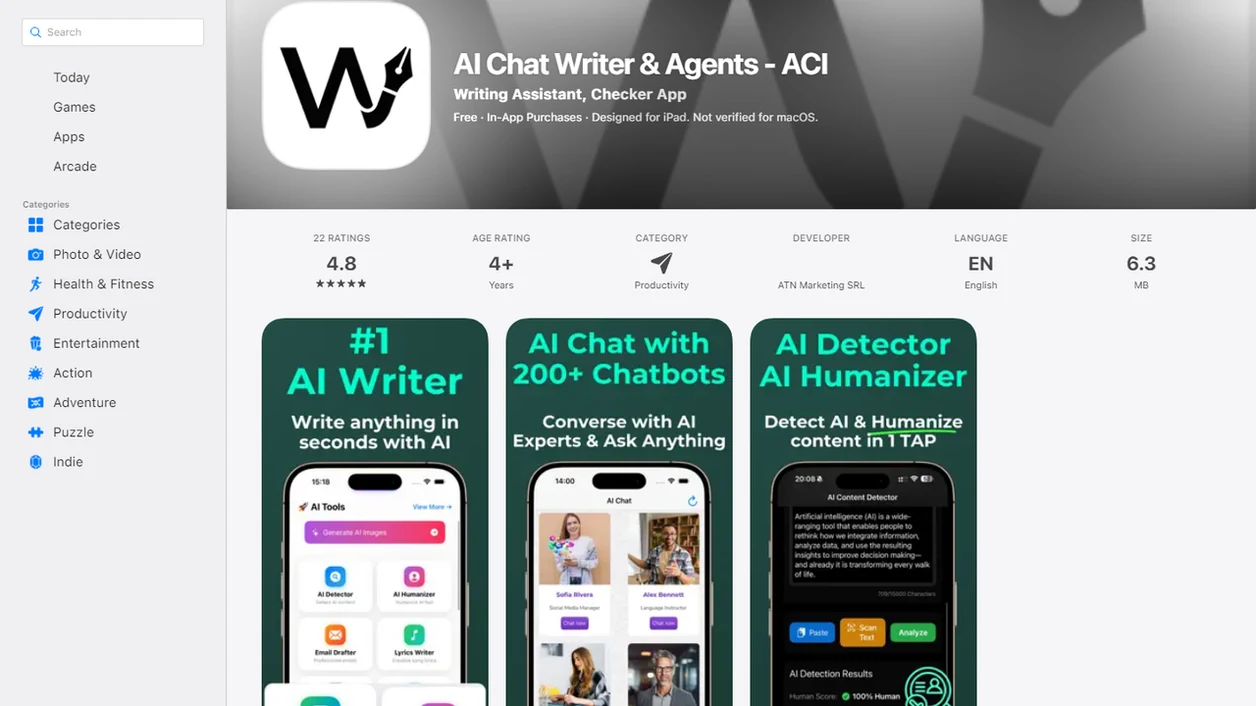
Side-by-side captures of the compared products. Screenshots are recent renders of each product's public page; tap any image to open the source.
AI Detector Vs Human Review Evidence At A Glance
AI detectors are faster and more consistent at scanning text patterns, while human review is stronger for context, fairness, and consequences. The practical answer is usually detector first, human review before any penalty.
| Review factor | AI detector | Human review |
|---|---|---|
| Speed | Scans many documents quickly | Slower, especially with appeals |
| Evidence strength | Pattern-based signal | Context-based judgment |
| False positive risk | Can flag human writing as AI-written | Can overtrust tone or “gut feel” |
| Context awareness | Cannot see policy, drafts, or intent | Can compare rules, process, and history |
| Scalability | Useful across hundreds of files | Better for selected cases |
| Best use case | Screening and triage | Grades, hiring, publishing, legal review, and compliance decisions |
A detector can help sort a folder of essays or applicant samples before the reviewer’s calendar fills up. But when the result affects a grade, job, contract, legal exposure, or formal record, a person needs to check the evidence file.
Five AI Detector Evidence Facts Before Any Human Review
Before any human review, treat AI detector evidence as a probability estimate, not an authorship record. The score may be useful, but it does not know who typed the sentence.
- AI detectors estimate likelihood from writing patterns; they do not prove that ChatGPT, Gemini, Claude, or another model wrote the text.
- Detectors can produce false positives and false negatives, so a high score and a low score can both mislead.
- Human reviewers are also imperfect; a teacher staring at a highlighted paragraph beside a score bar should not rely on instinct alone.
- In a 2024 randomized study of 1000 abstracts, humans identified AI-generated abstracts about 61% of the time, while one stronger detector reached 80% accuracy but still misclassified texts source.
- The same study found lower lexical diversity and higher repetition in AI-generated text, but the overlap with human writing was large.
A 2023 analysis also reported false positive risks for human-written text, especially for some non-native English writing samples source.
AI Detector Signals And Human Review Evidence Logs
AI detection works by analyzing statistical signals in text, including predictability, repetition, lexical diversity, sentence structure, and pattern regularity. In plain terms, the system asks whether the writing looks unusually easy for a language model to predict.
Detectors do not access a model’s internal history. They cannot prove that ChatGPT, Gemini, Claude, or another tool produced the document. That is why the “how it works” answer matters: detection is pattern analysis, not a chain-of-custody record.
Human review adds process evidence. A reviewer can inspect drafts, comments, edit logs, version history, prompts, interviews, source files, and policy language. We have seen cases where a missing page number or a source title pasted in the wrong case explained more than the detector score did.
A tool such as Write.info can support the checking step by producing a report reviewers save alongside drafts, notes, and policy records. It should not be used as an automatic penalty system.
AI Detector Scores For High-Volume Screening
AI detector scores are useful for fast first-pass screening across many documents. They are most helpful when the goal is triage, not punishment.
A detector applies the same tool-based analysis to the same text each time. That consistency can be better than rushed human impressions at 4:55 p.m., when an editor is trying to clear one more queue before leaving. Still, consistency is not the same as correctness.
Teachers, editors, hiring teams, compliance staff, marketers, and publishers can use detectors to prioritize cases for deeper review. A class set, applicant batch, or publishing backlog does not need every document treated as equally suspicious.
For high-volume teams, detector-first review is often more practical than human-only screening because it narrows the queue before trained reviewers spend time on context. The score should open a file, not close the case.
Human Review Safeguards For AI Detection Fairness
Does human review make AI detection fairer? It can, if the reviewer is trained, documented, and required to apply the actual policy instead of a vague suspicion.
Fairness matters for non-native speakers, neurodivergent writers, specialized technical writers, and people using formulaic formats. Lab reports, compliance memos, legal summaries, and scholarship essays often sound repetitive for reasons that have nothing to do with AI.
The U.S. Department of Education warned in 2023 that automated systems used for evaluation and monitoring can reproduce and amplify discrimination without oversight and safeguards source. That warning fits AI detection fairness directly.
Policy context also matters. Brainstorming with AI may be allowed in one course, while AI-generated final prose may be banned in another. Human review should compare the detector score against the written rule. Not against discomfort.
Training matters too. Otherwise, the process only replaces machine bias with reviewer bias.
Five-Step AI Detection Fairness Workflow For Schools And Employers
Use AI detection as a documented workflow, not a surprise verdict. The fairest process gives the writer notice, gathers process evidence, and ties the outcome to a written rule.
- Set a written AI-use policy before screening, including allowed tools, banned uses, disclosure rules, and possible outcomes.
- Scan with an AI detector to flag only review-worthy cases, not to decide guilt or misconduct.
- Collect drafts, version history, prompts, notes, source files, comments, and timestamps before reaching a conclusion.
- Ask the writer to explain the process, including planning, research, drafting, editing, and any AI assistance.
- Decide with proportional, policy-based outcomes, and document why the evidence supports the decision.
A student rereading a detector result at 11:47 p.m. before a learning-management-system upload window closes needs a clear next step, not a threat. Schools and employers should also explain how an appeal works before the first flagged case arrives.
AI Detector Evidence Policy For Grades, Jobs, And Compliance
AI detector evidence is one item in a broader evidence file, not a standalone verdict. The file should show what was checked, who reviewed it, and which policy controlled the decision.
Thresholds help. Low-risk scores may need no action. Medium-risk scores may justify a conversation. High-risk scores may require documented review, especially for grades, jobs, compliance findings, or publication integrity.
Set thresholds before screening begins, and do not adjust them after seeing a writer’s name, school record, job status, nationality, disability status, or prior discipline history. If thresholds change, document who changed them and why.
Useful supporting evidence includes draft timestamps, revision history, source notes, prompt logs, style consistency, reviewer notes, and comments exchanged during the writing process. Copy-pasting a paragraph into a web editor, watching highlighted sentences appear, then revising one claim at a time can create a trail that explains the final text.
Multiple detectors can help with triangulation, but they do not remove shared-bias risk. If tools use similar assumptions, they may repeat the same mistake. The same score can mean different things under different AI-use policies, which is why the AI detector vs plagiarism checker distinction also matters.
Decision Rule For AI Detector Review Or Human Review First
Use detector-first review for large-volume, low-immediacy screening where no penalty happens automatically. Use human-review-first for small numbers of high-impact cases, accommodations, appeals, and unclear policies.
| Situation | Recommended path | Why |
|---|---|---|
| Large essay batch | Detector first | Helps prioritize review time |
| Hiring writing test | Combined review | Job impact requires context |
| Accommodation case | Human review first | Pattern scores may misread the writer |
| Publisher integrity check | Combined review | Needs source, edit, and policy evidence |
| Legal or compliance document | Combined review | Formal risk requires documentation |
| Unclear AI-use rule | Human review first | You cannot enforce an unclear standard |
If the outcome affects a grade, job, contract, legal exposure, or formal record, require human review. That binary rule prevents a detector score from becoming an automatic penalty.
Apps such as Write.info, Grammarly, QuillBot, and ZeroGPT can fit into checking workflows, but the decision standard must come from the institution. For alternative-tool comparisons, the QuillBot alternative AI detector guide explains feature differences without treating a score as proof.
When To Escalate AI Detector Evidence To A Human Reviewer Or Counsel
Escalate AI detector evidence before it is used for any high-impact outcome. A score should not be the last stop before a grade penalty, hiring rejection, termination, legal claim, or compliance finding.
The escalation path should be proportionate to the risk. A trained reviewer may be enough for a routine appeal, but records, employment action, regulatory exposure, or disputed legal facts usually need institutional leadership or counsel before anyone acts. If the AI-use policy was unclear, unpublished, or applied after the fact, pause the decision instead of trying to force the evidence into a rule that was not disclosed.
- Identify the consequence before deciding who reviews the file, especially for grades, jobs, contracts, discipline, or formal records.
- Assign a trained reviewer for accommodation questions, language-background concerns, disability-related context, and appeal cases.
- Pause the action if the policy is vague, missing, or was not shared with the writer before the work was submitted.
- Consult counsel or leadership when the file may create legal exposure, compliance obligations, or permanent institutional records.
- Document when escalation happened, who reviewed the evidence, what materials were considered, and why the final decision followed the policy.
Limitations
No AI detector or human review process can settle authorship with perfect certainty. A fair system names its limits before it uses a score.
- No AI detector is 100% accurate.
- False positives can wrongly flag human writing as AI-generated.
- False negatives can miss AI-written or heavily edited AI-assisted text.
- Paraphrasing, rewriting, translation, and human editing can lower detector scores without proving authorship.
- Detectors may be less reliable for non-standard English, second-language writing, technical jargon, and highly templated documents.
- Human reviewers can bring bias, inconsistency, fatigue, and institutional pressure.
- Multiple detectors may share similar training assumptions and repeat the same errors.
- A fair process requires written policy, reviewer training, documentation, appeal options, and proportional outcomes.
One more limit is practical. A second monitor filled with tone edits can make a draft more human-sounding without answering the core policy question. The broader AI detector limitations issue is not just accuracy; it is evidence quality.
FAQ
How accurate are AI detectors for student or workplace writing?
AI detectors can be useful for screening, but they are not perfectly reliable. Accuracy varies by text type, tool, editing history, and writer background.
Can an AI detector wrongly flag human writing?
Yes. A false positive means human writing is flagged as AI-written, while a false negative means AI-written or AI-assisted text is missed.
Is an AI detector score proof that someone used AI?
No. An AI detector score is a probabilistic signal based on writing patterns, not proof of misconduct or authorship.
Why is human review needed after an AI detector report?
Human review adds drafts, version history, policy interpretation, interviews, and writing-process evidence. It helps prevent automatic penalties based only on a score.
Can teachers use AI detectors to grade student work?
Teachers can use detectors as screening tools, but they should not assign penalties automatically from a detector score. Fair educational use requires a clear policy, review, documentation, and an appeal path.
Can employers use AI detectors for hiring or employee documents?
Employers can use AI detectors for limited screening, but adverse action should require documented human review. The reviewer should compare the report with the job rule, writing task, and supporting evidence.
What evidence should be reviewed with an AI detector report?
Review the detector report, drafts, version history, prompt logs, research notes, source files, comments, and the writer’s explanation. ACI and similar tools may help organize checking, but the final decision needs human judgment.
Do low AI detector scores prove that writing is fully human?
No. Edited AI-assisted writing, paraphrased text, translated text, and heavily revised drafts may receive low AI scores.
How should someone appeal an AI detector decision?
An appeal should allow the writer to submit drafts, notes, version history, sources, and a process explanation. A second trained human reviewer should reassess the evidence under the written policy.