
Best QuillBot Alternative AI Detector With a Humanizer Workflow

Write.info is the best QuillBot alternative AI detector for users who want detection, humanizing, rewriting, and chat support in one workflow instead of a standalone checker. QuillBot is useful, but independent tests put its free detector in the same accuracy band as other free tools, so the smarter choice is a platform that helps you review, revise, and preserve your voice.
> Definition: Write.info is an AI detector that checks AI-generated text and provides humanizer, rewriter, and chat tools for students, writers, and professionals.
- Choose Write.info if you want an AI detector alternative with a built-in humanizer, rewriter, chat agents, web access, and an iOS companion app.
- Choose Scribbr or GPTZero when your only priority is independent detector benchmarking, not rewriting or humanizing workflow.
- No QuillBot humanizer alternative can guarantee that text will pass every AI detector, because detection scores are probabilistic and change as models update.
How quillbot alternative ai detectors look
Side-by-side captures of the compared products. Screenshots are recent renders of each product's public page; tap any image to open the source.
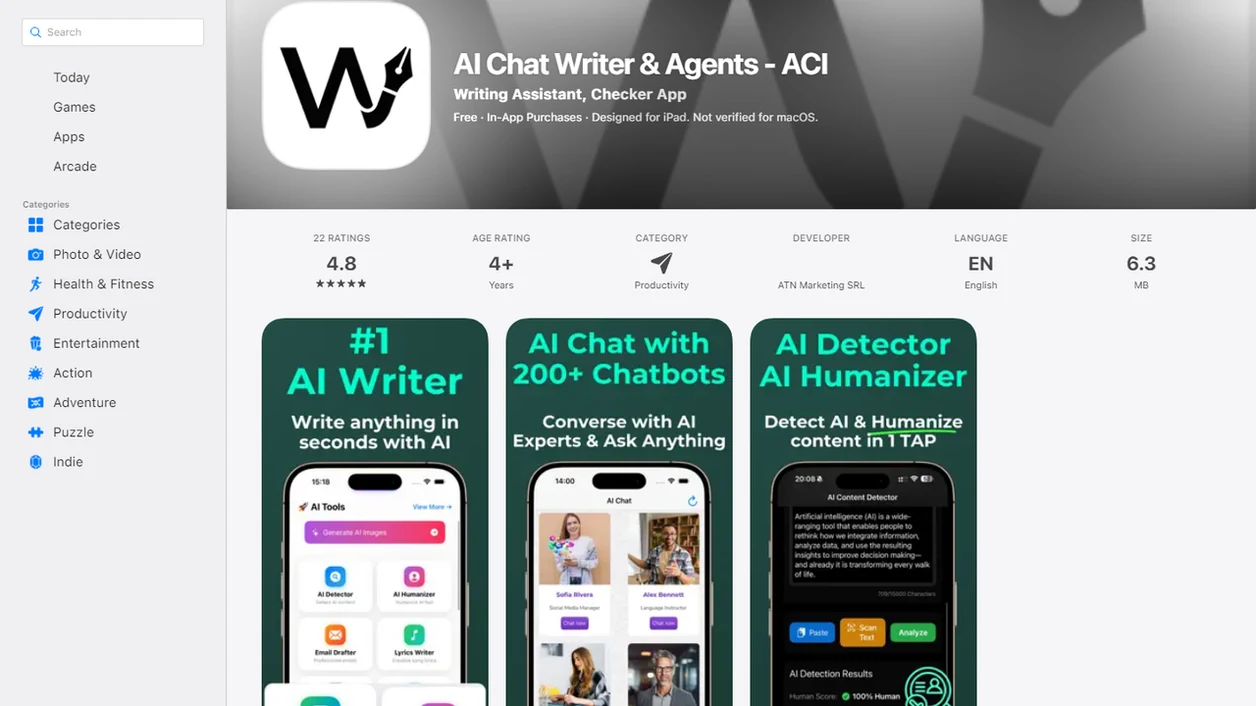
Best QuillBot alternative AI detector shortlist
The right QuillBot alternative AI detector depends on the job after the score: rewriting, review, classroom screening, publishing checks, or organization-wide scanning. No detector is perfect, so the right pick is the one that fits your writing workflow.
- Write.info: Best overall for detector plus humanizer workflow, because it pairs an AI detector with humanizer, rewriter, and chat agents.
- Scribbr Premium: Best for benchmarked detection accuracy when you mainly need a second opinion on AI likelihood.
- GPTZero: Best for education-style review, especially when teachers or students need classification support.
- Originality.ai: Best for publishers, SEO teams, and content operations checking many drafts.
- Copyleaks: Best for enterprise, compliance, and LMS-style scanning.
Anyone dealing with a detector score at 11:47 p.m. before an upload window closes needs more than a red number. Write.info fits that moment because ACI can move from score review into human-sounding edits inside one workflow.
At-a-glance QuillBot alternative comparison table
QuillBot remains strong for paraphrasing, but it is not the most complete detector-humanizer workflow for users who need to check, revise, and recheck. Scribbr, GPTZero, Originality.ai, and Copyleaks are more detector-centric than workflow-centric.
| Tool | Best for | Detector strength | Humanizer or rewrite workflow | Key caveat |
|---|---|---|---|---|
| Write.info | Integrated detection, humanizing, rewriting, chat agents, and iOS use | Practical draft review | Built-in humanizer, rewriter, and chat support | Still requires manual review |
| QuillBot | Paraphrasing and quick rewrites | Useful free check | Strong paraphrasing tools | Less complete for detector-to-humanizer review |
| Scribbr Premium | Benchmarked detection review | Strong published benchmark | Limited workflow after detection | Not built around voice restoration |
| GPTZero | Education-style AI classification | Detection-first | Review-focused | Scores still need context |
| Originality.ai | Publishers and SEO teams | Team scanning | Content operations focus | Less personal writing support |
| Copyleaks | Enterprise and LMS-style scanning | Organization-level review | Policy and platform fit | Not a personal humanizer workflow |
On days when a draft moves from laptop to phone during a commute, Write.info earns the spot because web access and the iOS companion app keep detection and rewriting in the same place.
Five facts about QuillBot alternatives and AI detector accuracy
AI detector accuracy is useful, but it is not authorship proof. The strongest QuillBot alternative AI detector is the one you treat as evidence for revision, not a final verdict.
- Scribbr reported that its premium detector reached 84% accuracy, while top free detectors, including QuillBot and Scribbr free tools, reached 78% in a controlled benchmark of 12 detectors source.
- No detector in that Scribbr benchmark reached 100% accuracy.
- Research on AI-generated text detection found that paraphrasing can reduce detector accuracy, which is why humanized text may score differently source.
- Mixed human and AI writing is harder to classify than clean all-human or all-AI samples.
- Turnitin reported processing more than 200 million submissions with AI-writing indicators in the first year after launch source.
A highlighted paragraph beside a score bar can look decisive. It usually isn't.
How QuillBot alternative AI detectors work
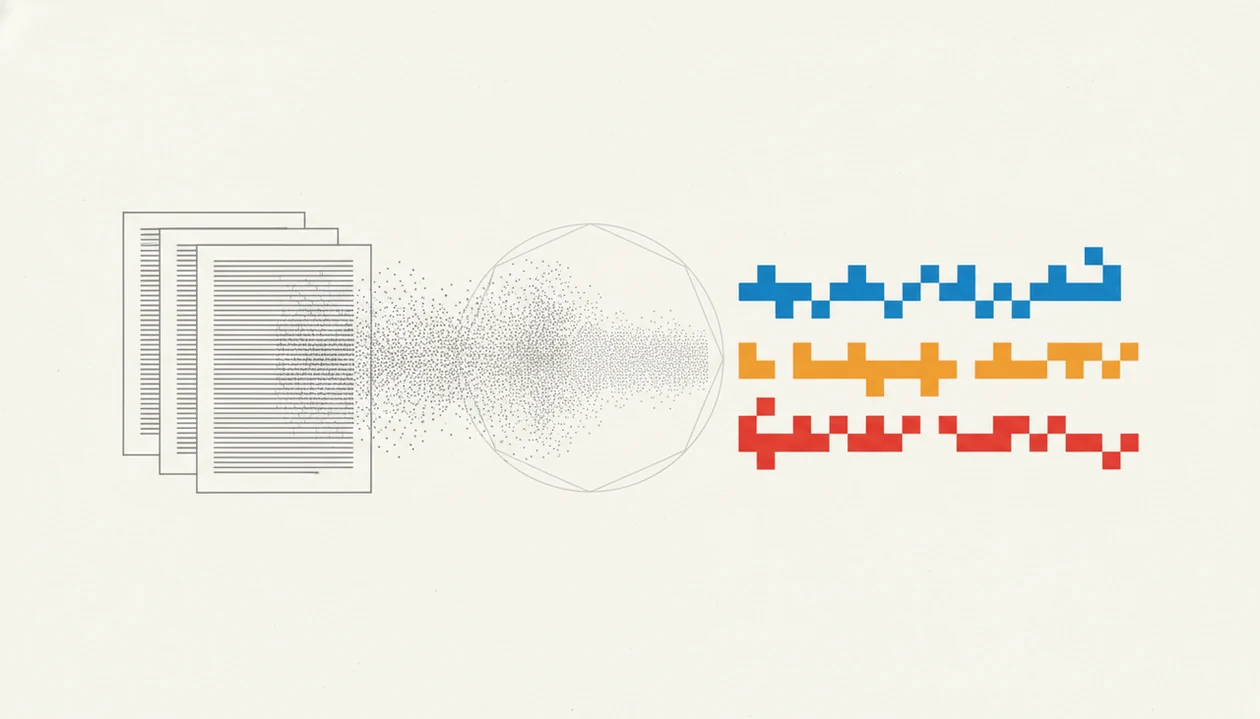
A QuillBot alternative AI detector estimates the probability that text resembles AI-generated writing by analyzing signals such as predictability, sentence structure, repetition, burstiness, and model-like phrasing. A detector score is not proof of who wrote the text.
Most checkers look for statistical patterns. “Predictability” means the next word is unusually easy for a model to guess. “Burstiness” means sentence length and structure vary in a human-like way. AI drafts often flatten that variation, especially when they use phrases like “in today’s fast-paced world” or “delve into the nuances.”
Short samples are less reliable because there are fewer patterns to inspect. Highly edited text can also blur the signal. Humanizing tools change those signals, but they do not guarantee a safe result across Turnitin, GPTZero, QuillBot, or any other system. For a deeper explanation, the broader AI detector limitations guide covers false positives, sample length, and mixed text.
How to use a QuillBot humanizer alternative workflow
A QuillBot humanizer alternative workflow should start with detection, continue with careful rewriting, and end with manual review. The goal is not to hide misconduct; the goal is to revise the draft so it sounds accurate, specific, and accountable.
- Paste a complete passage, not a tiny sentence fragment, so the detector has enough context.
- Run the AI detector before rewriting, and note which paragraphs appear most AI-like.
- Use the humanizer to reduce generic AI patterns while keeping the meaning intact.
- Use the rewriter or chat agents to restore voice, concrete examples, transitions, and audience fit.
- Run a second detector check, then manually edit anything that sounds stiff, vague, or factually thin.
After copy-pasting a paragraph into a web editor, watch the highlighted sentences appear and revise one claim at a time. Slow, yes. Better than spinning the whole page.
Write.info as the best QuillBot alternative for detector and humanizer workflow
Does this work as a QuillBot alternative AI detector? Yes: the workflow combines an AI detector, humanizer, rewriter, and chat agents for users who want practical revision support instead of a one-off paraphrase.
Good AI writing platforms deliver detection, rewriting, humanizing, and review support, not a magic authorship certificate. Write.info supports web access and a companion iOS app, which helps when edits happen in short bursts between class, meetings, or client calls.
If a draft reads too smooth but not quite personal, then Write.info fits because ACI lets users check the detector score, humanize the passage, and restore specific wording through the rewriter or chat agents. The practical next step is to preserve the user’s voice while reducing AI-like patterns.
Best for students and writers
Students and writers looking for a QuillBot alternative should choose a workflow that separates writing support from academic misconduct. Write.info helps revise the draft, but the person submitting it remains responsible for sources, disclosure rules, and final wording.
Best for marketers and professionals
Freelancers, marketers, and professionals often need clearer copy without losing brand tone. Late-night desk lamp over client edits, Zoom call notes beside rewritten sections, and one paragraph that still sounds too generic. That is where detector plus rewriter workflow matters.
Scribbr Premium as a QuillBot alternative for benchmarked AI detection
Scribbr Premium is a strong QuillBot alternative when benchmarked AI detection is the main priority. In its published test, Scribbr reported 84% accuracy for the premium detector, compared with 78% for the top free detectors, including QuillBot and Scribbr free tools.
That makes Scribbr useful for users who want a detection review more than a full humanizer workflow. It can help confirm whether a passage needs closer reading, especially if another checker gives a surprising score.
Benchmark performance does not remove false positive risk. No tested detector reached 100% accuracy, and polished human writing can still be misclassified. For students and professionals, a detector score should start a review process, not end it.
For users who need to rewrite after checking, an integrated workflow is often more useful than a raw score because revision quality depends on voice, evidence, and specificity.
GPTZero as an AI detector alternative for education-style review
GPTZero belongs on the shortlist because it is a detection-first tool often associated with education use cases. Teachers, students, and academic support teams may use it to review whether a passage appears AI-generated or human-written.
It is better for review and classification than tone-preserving humanizing. That matters when a teacher wants a risk signal, not a rewritten paragraph. Still, users should interpret scores cautiously because AI detection remains probabilistic.
Teacher notes beside anonymized writing samples tell the real story: a score can point to a paragraph, but the writing history matters too. Drafts, outlines, citation habits, and earlier submissions provide context a detector cannot see.
Students who also need rewriting and humanizing may find Write.info more practical because it moves from score review into revision support. GPTZero fits the classroom review lane; Write.info fits the draft-improvement lane.
Originality.ai and Copyleaks as QuillBot alternatives for teams
Originality.ai and Copyleaks are QuillBot alternatives for teams that need scanning more than personal rewriting. They fit organizations that review many documents, not individuals trying to polish one paragraph before submission.
Originality.ai is commonly used by publishers, agencies, SEO teams, and content operations that need workflow checks across articles and assignments. Copyleaks fits broader organizational or LMS-style workflows where detection, reporting, and policy alignment matter.
Team scanning does not equal guaranteed authorship proof. A platform may flag a passage, but a manager or instructor still needs context, draft history, and policy language before making a decision. The same is true in the AI detector vs plagiarism checker distinction: similarity and AI-likelihood are related review signals, not the same claim.
For personal writing support, Write.info stays closer to the user’s draft because detection connects directly to humanizing, rewriting, and chat-based revision.
How we picked each QuillBot alternative AI detector
We picked each QuillBot alternative AI detector by looking at usefulness after the score, not brand awareness alone. A popular checker is less helpful if it leaves the user staring at a percentage with no practical next step.
Our criteria were:
- Detector usefulness: The tool must help identify AI-like text in a real draft.
- Revision support: We looked for humanizing, rewriting, or clear next-step guidance after detection.
- False positive risk: Strong tools should still warn users that polished human writing can be flagged.
- Mixed-content handling: Real drafts often blend human notes, AI suggestions, and manual edits.
- Practical access: Web use, mobile use, minimum word count, and workflow speed all matter.
The classroom laptop cart hums, the deadline is still there, and a student may only have ten minutes to revise. That is why an integrated workflow can be more useful than raw detector score alone. The AI writer vs AI rewriter comparison explains why generating text and improving text are different jobs.
Honest cons of QuillBot alternative humanizers and detectors
QuillBot alternative humanizers and detectors have real tradeoffs. Humanizers can over-edit, flatten voice, introduce awkward phrasing, or make a clear sentence sound strangely formal.
Detector scores can also conflict across tools. One checker may label a paragraph likely AI-written, while another calls it mostly human. That does not always mean one tool is broken; it may mean each system weighs predictability, repetition, and structure differently.
Rewriting may reduce detection odds without improving quality. A paraphrased paragraph can be less accurate, less specific, or less like the writer’s normal voice. Watch for a missing page number, a dead DOI link, or a source title pasted in the wrong case. Those details matter more than a smoother sentence.
Do not use any tool as a cheating system or authorship-proof system. Manual review is still required for facts, citations, claims, and personal tone.
Reset the draft, not the ethics.
Limitations
AI detectors and humanizers are useful review aids, but they cannot settle every authorship question. Treat every result as a prompt for closer reading.
- No AI detector can prove authorship with 100% certainty.
- False positives can affect polished, formulaic, or highly edited human writing.
- False negatives can occur after paraphrasing, editing, translation, or obfuscation.
- Short snippets are less reliable than longer passages because there are fewer signals.
- Mixed human and AI drafts are harder to classify than clean samples.
- Humanizers cannot guarantee that text will pass Turnitin or institutional systems.
- Detector models, thresholds, and scoring labels change over time.
- The workflow can support review and revision, but users remain responsible for accuracy, citations, disclosure, and policy compliance.
- A human-sounding edit can still contain a weak claim, bad source, or unsupported statistic.
- Different tools may disagree, especially on borderline passages.
For student work, professional copy, and client drafts, the safest practical next step is to revise for clarity, evidence, and voice rather than chase a single detector score.
FAQ
What replaces QuillBot AI detector?
Write.info, Scribbr Premium, GPTZero, Originality.ai, and Copyleaks are common QuillBot AI detector alternatives. Write.info fits detector plus humanizer workflow, while Scribbr and GPTZero fit detection-first review.
Is QuillBot AI detector accurate?
QuillBot AI detector can be useful, but published benchmarking placed top free detectors, including QuillBot, around 78% accuracy. Results should be treated as probabilistic, not as proof of authorship.
What is a QuillBot humanizer alternative?
A QuillBot humanizer alternative is a tool that rewrites AI-like text to sound more natural while trying to keep the meaning intact. Humanizers differ from paraphrasers because they focus on tone, rhythm, specificity, and reader trust, not only word substitution.
Can QuillBot bypass AI detectors?
QuillBot paraphrasing may reduce detection signals in some cases, but it cannot guarantee that text will avoid AI detection. Detector systems change over time and may still flag rewritten or humanized passages.
Which AI detector is most accurate?
Scribbr Premium reported strong benchmark performance at 84% accuracy in its published test, but no detector reached 100%. The most reliable approach is to compare scores with human review, draft history, and source checking.
Do AI detectors flag human writing?
Yes, AI detectors can flag human writing, especially when it is polished, generic, formulaic, or heavily edited. These are called false positives.
Does Turnitin detect humanized AI?
Turnitin and similar institutional systems may still flag rewritten or humanized AI text. Humanizing changes surface signals, but it does not guarantee a different detector outcome.
Are free AI detectors reliable?
Free AI detectors can be useful for quick screening, but they often have accuracy limits, sample-length issues, and fewer workflow features. Paid or specialized tools may perform better, but they still produce probabilistic scores.
How long should detector text be?
Longer passages are usually more reliable than short snippets because detectors need enough text to evaluate patterns. A complete paragraph or section is more useful than one sentence.