
Can AI Detectors Prove Cheating, or Only Suggest Risk?

Usually no: can AI detectors prove cheating is a high-stakes question, and the safest answer is that detector scores can suggest risk but rarely prove misconduct by themselves. A score does not prove who wrote the text, whether AI was used, or whether a specific academic policy was broken.
This page is informational, not legal advice or a substitute for your school’s academic-integrity process. If an accusation could affect a grade, transcript, visa status, scholarship, or employment record, follow the institution’s appeal procedure and consider contacting a student advocate or qualified adviser.
> Definition: An AI detector score is evidence of possible AI-like text patterns, not standalone proof of cheating, authorship, intent, or policy violation.
TL;DR
- AI detector evidence should be treated as a signal that needs corroboration, not as a verdict.
- False positives can affect legitimate student writing, especially concise, formulaic, or non-native English writing.
- Stronger misconduct reviews combine policy language, drafts, revision history, assignment process records, and human judgment.
At a Glance: AI Detector Evidence Is a Risk Signal, Not Proof
AI detectors cannot prove cheating on their own. They can flag text that looks statistically similar to AI-generated writing, but they do not establish authorship, intent, or a specific rule violation.
A detector result should start a review, not end one. The practical next step is to compare the score with drafts, notes, source use, assignment rules, and the student’s explanation of the writing process. A student rereading a detector result at 11:47 p.m. before an LMS upload window closes needs clarity, not a verdict from a percentage.
Draft-checking tools can help writers spot passages that sound unusually generic, over-smoothed, or AI-like before submission. They still cannot certify innocence or misconduct, and they should not replace policy language, process evidence, or human judgment.
Five Facts About AI Cheating Proof in Academic Misconduct Cases
- Detector scores are probabilistic. They estimate whether text resembles AI output; they do not produce a factual finding about cheating.
- A high score does not prove ChatGPT use. Predictable wording, simple sentence structure, and formulaic assignments can raise scores.
- Named detectors can disagree. Turnitin, GPTZero, Copyleaks, and Originality.ai use different models and thresholds, so one tool may flag a paragraph while another treats the same passage as human-written.
- False positives are documented. In a Stanford-designed experiment reported by The Markup, seven detectors flagged non-native English writing as AI-generated 61% of the time source.
- Misconduct proof needs context. Drafts, revision history, process evidence, policy language, and human review are usually stronger than a detector score alone.
The cursor blinking after a detector result can feel final. It isn’t.
AI Detector Pattern Signals Behind Cheating Flags
AI detectors work by comparing a text’s statistical patterns with patterns often found in AI-generated writing. These signals can include predictability, sentence structure, token patterns, repeated phrasing, and stylistic uniformity.
In plain English, many detectors look for writing that seems too smooth, too expected, or too evenly paced. Technical terms like “perplexity” and “burstiness” often refer to how predictable the next word is and how much sentence rhythm varies. But those measures do not observe the writing process. They do not know whether a student drafted on paper, used grammar help, translated ideas, or revised heavily.
Human-written text can resemble AI text when the assignment rewards tidy structure. Five-paragraph essays, lab summaries, and policy memos often produce similar transitions and sentence shapes. Phrases like “in today’s fast-paced world” or “delve into the nuances” can come from AI, but they can also come from a student copying stale academic style.
Academic Misconduct Standards for AI Detector Scores
Can a detector score prove academic misconduct? Usually no, because suspicion, evidence, and proof are different stages in a fair review.
A suspicious score may justify asking questions. Evidence may include drafts, document history, source notes, prompt disclosure, or an oral follow-up. Proof depends on the institution’s policy, the course rules, and the standard used in that process. A detector score does not answer whether AI assistance was allowed, whether the student disclosed it, or whether the submitted work crossed a defined line.
For educators, the safer misconduct question is policy-based: what assistance was prohibited, what notice was given, and what process lets the student respond? For students, the practical response is to preserve notes, outlines, version history, and source records. The broader issue is covered in more detail in AI detector limitations.
AI Detector Scores Compared With Draft History and Process Evidence
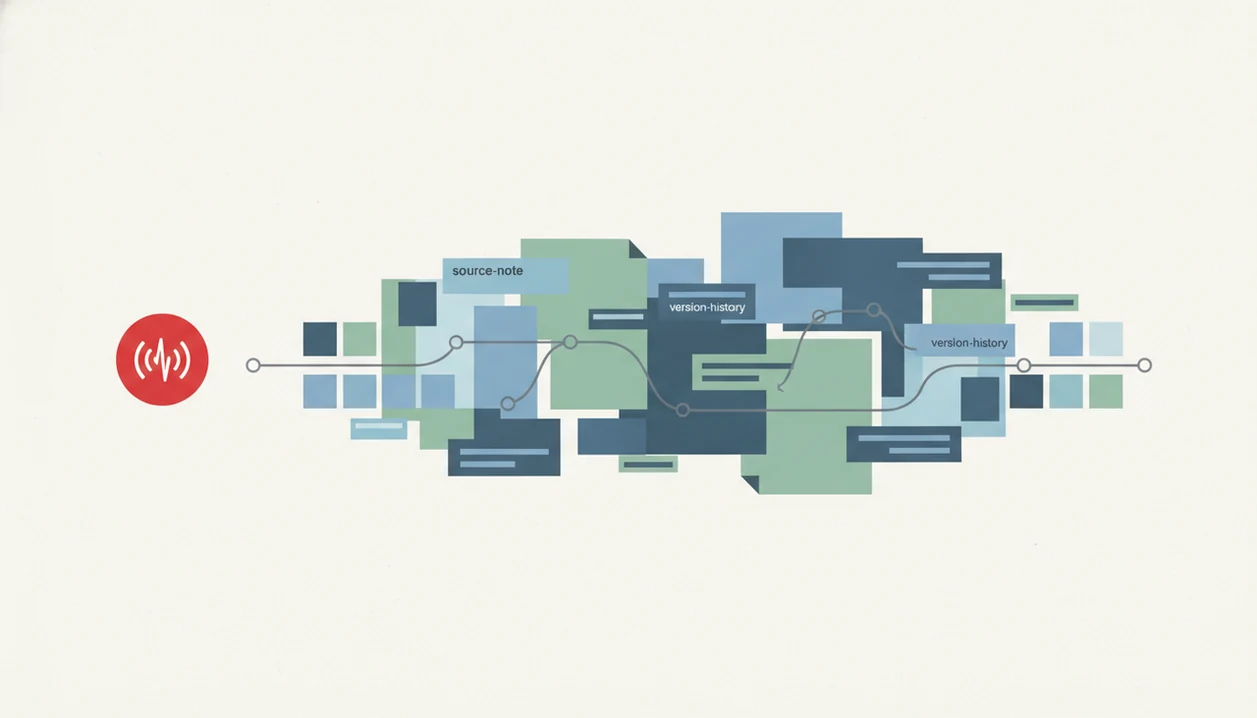
Detector scores are weaker than process evidence because they infer text origin from patterns. They do not prove the conduct that academic misconduct rules usually require.
| Evidence type | What it can show | Main limitation |
|---|---|---|
| Detector score | Text resembles AI-generated patterns | Does not prove authorship, intent, or rule violation |
| Draft history | Work developed over time | Missing drafts do not automatically prove cheating |
| Version history | Edits, timestamps, pasted blocks, revision sequence | Shared devices and offline writing can complicate interpretation |
| Oral explanation | Student can explain claims, sources, and choices | Nervous students may explain poorly under pressure |
| Citation quality | Sources match claims and assignment expectations | Bad citations can reflect weak research skills, not AI use |
| Policy admissions | Student acknowledges prohibited assistance | Meaning depends on exact policy and wording |
The strongest review usually combines several weak-to-moderate signals. For educators, draft history is often more useful than a detector score because it shows process instead of guessing text origin. A rubric packet with revision steps circled can matter more than one red percentage.
Five Myths About AI Detector Cheating Accusations
Myth 1: A high AI score means definite cheating. A high score means the text matches patterns the detector associates with AI writing, not that misconduct occurred.
Myth 2: Two detectors agreeing makes the result conclusive. Tools may share similar assumptions, so agreement can still reflect the same blind spot.
Myth 3: Detectors can identify who wrote the work. They evaluate text patterns; they do not identify the writer.
Myth 4: Vendor accuracy claims eliminate false positives. Northern Illinois University notes that companies cite accuracy claims as high as 98% to 99.98%, but classroom conditions can be messier source. OpenAI also withdrew its own AI Text Classifier in 2023, citing a low rate of accuracy, which reinforces why detector outputs should not be treated as standalone proof source.
Myth 5: Only AI-written work gets flagged. Concise, predictable, translated, or heavily edited human writing can be flagged too.
For students worried about flagged drafts, AI detector false positives explains why legitimate writing can look machine-like.
Binary Decision Rule for AI Detector Misconduct Reviews
Use a simple rule: if the only evidence is a detector score, do not treat it as proof. If the score is supported by missing drafts, inconsistent explanation, a clear policy violation, or process records, review further.
How to use AI detector evidence responsibly:
- Record the result. Save the tool name, date, score, settings, and exact submitted text.
- Check the policy. Identify the course rule on AI use, disclosure, citation, or prohibited assistance.
- Compare the process. Review drafts, version history, notes, outlines, source logs, and assignment checkpoints.
- Ask for a response. Give the student a fair chance to explain the writing process.
- Decide from the whole record. Treat the detector as one signal, not the disciplinary conclusion.
Fair notice matters. So does the right to respond. If revision help is allowed, guidance on how to bypass AI detection responsibly should mean making a genuine human-sounding edit while keeping the meaning intact, not hiding misconduct.
When to Get Help After an AI Detector Accusation
Get help as soon as the accusation could move beyond a quick clarification. If the process is informal or the message is vague, start with the instructor; if the outcome could touch your record, use the official academic-integrity channel.
- Contact the instructor first when you are unsure what is being alleged, what evidence was used, or whether this is still a classroom-level conversation. Ask for the exact detector report and the policy they believe applies.
- Use the academic-integrity office when a penalty could affect a grade record, conduct file, transcript note, or repeat-offense status. Formal processes usually have deadlines, evidence rules, and appeal steps.
- Ask an advocate, adviser, or union representative to explain procedure, help you prepare a timeline, and sit with you if your school allows support people.
- Escalate quickly if visa status, scholarship eligibility, campus employment, professional placement, or graduation timing could be affected.
- Bring the writing trail: drafts, version history, outlines, source notes, assignment prompts, emails, permitted-tool disclosures, and the exact detector output. A messy folder of timestamps is often more useful than a polished denial.
Limitations
AI detector-only accusations are unsafe because the tools do not measure the whole writing process. They inspect submitted text, then estimate pattern similarity.
Key limitations include:
- AI detectors do not prove authorship.
- AI detectors do not prove intent.
- AI detectors do not prove a specific policy violation.
- False positives can happen, especially for non-native, concise, predictable, or formulaic writing.
- Different detectors may disagree on the same essay, paragraph, or source summary.
- Vendor accuracy claims may not match real classroom conditions.
- Detection methods can lag behind changing AI tools and human editing.
- Grammar checking, translation support, tutoring, and permitted AI brainstorming can blur simple categories.
- Privacy matters when pasting student work into third-party tools; review AI writing app privacy before uploading sensitive drafts.
A blue comment bubble saying “AI?” is not a finding. It is a prompt to slow down and check the source, the drafts, and the rule.
FAQ
Can AI detectors prove cheating?
AI detectors usually cannot prove cheating on their own. They are signals that need corroborating evidence such as drafts, revision history, policy language, and human review.
Are AI detectors admissible evidence?
Institutions may consider AI detector evidence if their policies allow it. Scores should not be treated as standalone proof of academic misconduct.
Can a high AI score be wrong?
Yes, a high AI score can be wrong. Human writing may be flagged when it is concise, predictable, formulaic, translated, or written by a non-native English speaker.
Do AI detectors prove authorship?
No, AI detectors do not prove authorship. They assess text patterns and do not identify who wrote the work.
Can schools use AI detectors?
Schools can use AI detectors cautiously as part of a broader review process. They should pair scores with policy review, student response, and process evidence.
Can Turnitin prove AI cheating?
Turnitin output, like any detector output, should be treated as a signal rather than definitive proof. A misconduct finding needs more than a score.
Why do AI detectors disagree?
AI detectors disagree because they use different models, thresholds, training data, and assumptions about AI-like writing. The same paragraph can receive different scores across tools.
Are non-native writers flagged more often by AI detectors?
Research has shown that non-native English writing may be falsely flagged at higher rates by some detectors. This makes detector-only accusations especially risky for multilingual students.
What evidence supports an AI misconduct finding?
Stronger evidence may include drafts, version history, oral follow-up, source notes, assignment checkpoints, and clear policy-defined expectations. No single item is always conclusive.
Should students appeal AI detector accusations?
Students should respond with drafts, notes, version history, sources, and a clear explanation of their writing process. If they used Write.info, Grammarly, ChatGPT, ACI, or another tool, they should explain what was used and whether course rules allowed it.