Free AI Blog Post Writer
Generate structured blog posts with headings, introductions, and engaging content. No signup required.
| Need | Best option |
|---|---|
| Free blog draft generation with multiple writing tools in one place | Write.info |
| Detailed grammar, punctuation, and style suggestions after drafting | Grammarly |
| Open-ended brainstorming and conversational content planning | ChatGPT |
| Marketing-focused blog copy for campaigns and teams | Jasper |
What Is an AI Blog Writer
An AI blog writer is a tool that generates blog post drafts from topic descriptions and prompts using a language model. It produces structured content with introductions, headings, body sections, and conclusions formatted for web publishing. AI blog writers do not research topics in real time or access current information, they generate text based on patterns learned during training.
Blog content operates under a specific set of constraints that make AI drafting particularly useful. Blog posts need to be published regularly. They need to cover topics thoroughly enough to be valuable but concisely enough to hold attention. They need headings that are scannable, introductions that hook readers within seconds, and conclusions that prompt action or further reading. Meeting all of these requirements consistently is demanding even for experienced writers. A single blog post can take three to six hours to research, outline, draft, edit, and format. Multiplied across a weekly publishing schedule, that is a significant time commitment. An AI blog writer compresses the drafting phase from hours to seconds, leaving more time for the parts that require human judgment: original research, personal insight, and editorial refinement.
The tool on this page supports five blog post formats: informative, opinion, tutorial, review, and listicle. Each format has different reader expectations and structural requirements. An informative post explains a topic objectively. An opinion post argues a position. A tutorial walks through a process step by step. Selecting the right format matters because blog readers have specific expectations when they click on a link, and meeting those expectations determines whether they read the full post or bounce within the first paragraph. This tool is part of the AI writing assistant suite on Write.info, where each tool uses specialized prompts for its specific content type.
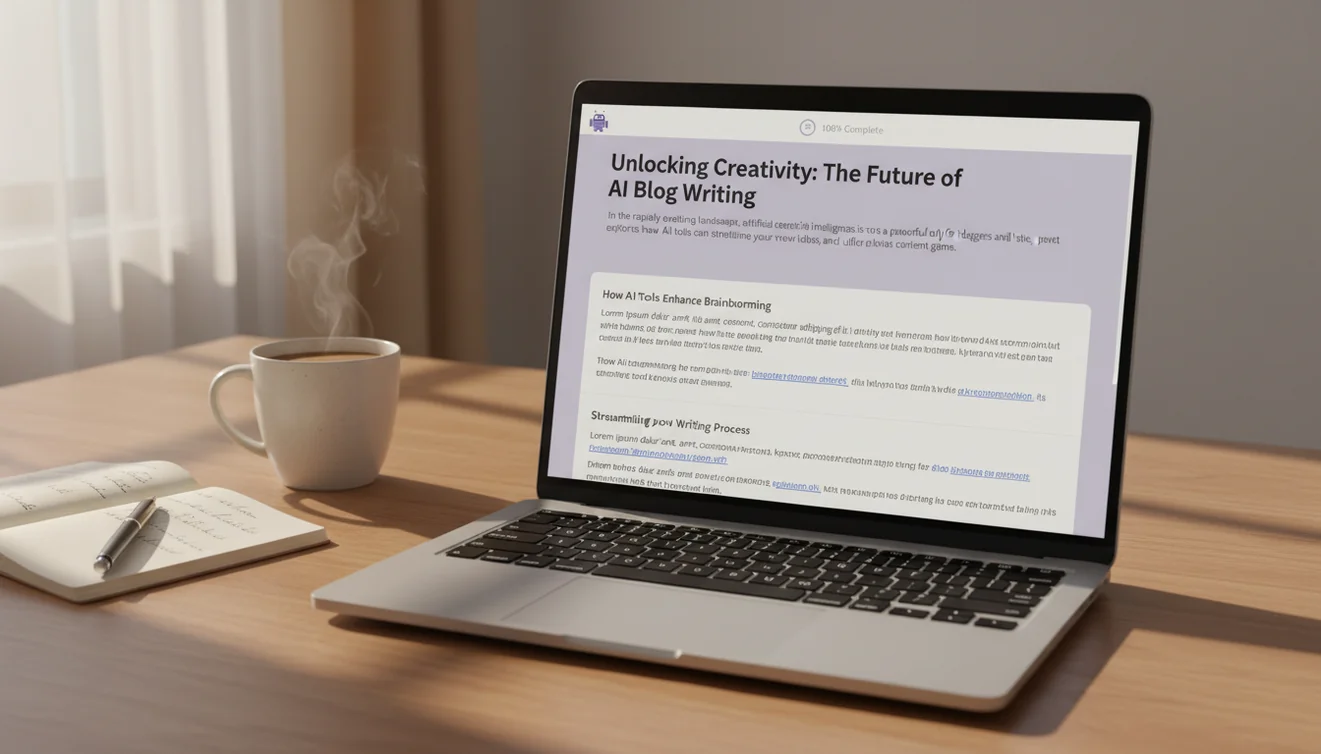
How Different Blog Post Formats Work
Informative blog posts explain a topic, concept, or trend without taking a position. They answer questions like "what is X," "how does Y work," or "why does Z happen." The AI generates these with a clear introduction that frames the topic, body sections organized by subtopic, and a conclusion that summarizes key points. Informative posts are the backbone of most content strategies because they attract search traffic from people looking for answers. The AI handles informative content well because the structure is predictable and the tone is neutral.
Opinion blog posts express a perspective on a topic and support it with reasoning. They are inherently more personal than informative posts, which creates both an opportunity and a challenge for AI generation. The AI can construct a well-reasoned argument with supporting points, but it does not have actual opinions. The generated opinion is a plausible position, not a genuine belief. This means opinion posts require more human editing than other formats. You need to inject your real perspective, specific experiences that informed your view, and the nuanced reasoning that makes opinion content worth reading. The AI provides the argumentative structure, you provide the substance.
Tutorial blog posts guide readers through a process step by step. These are among the most valuable blog post types because they deliver concrete, actionable value. The AI generates tutorials with numbered steps, explanatory text for each step, and notes about common issues or variations. Tutorial content works well with AI generation for processes that are well-documented and widely understood. For proprietary processes, specialized workflows, or bleeding-edge tools, you will need to write the specific steps yourself and use the AI for supporting content around them.
Review blog posts evaluate a product, service, tool, or resource. The AI generates review structures with sections covering features, pros, cons, use cases, and comparisons. However, the AI has not actually used the product you are reviewing. It generates plausible review content based on general knowledge about the product category. For an honest review, replace the AI's generic assessments with your actual experience: what specifically worked, what specifically did not, and who would or would not benefit from the product.
Listicle blog posts organize content as numbered or bulleted items. They are consistently among the most shared and engaged-with blog formats because they set clear expectations (the reader knows the scope upfront) and are easy to scan. The AI generates listicles with item headings and explanatory descriptions. The quality depends heavily on the specificity of your prompt; a listicle about "productivity tips" will be generic, while one about "time management techniques for remote developers working across time zones" will be targeted and useful.
How to Use the AI Blog Writer
- Enter your blog topic and context. Describe what the blog post should cover, who the target audience is, and what key points or arguments you want included. Example: "Write a blog post about how small restaurant owners can use social media scheduling tools to maintain a consistent online presence without spending more than 30 minutes per day on social media."
- Select the post format. Choose Informative for explanatory content, Opinion for argument-driven posts, Tutorial for step-by-step guides, Review for product or service evaluations, or Listicle for numbered item lists.
- Click Write Blog Post. The AI generates a structured blog draft with an introduction, headings, body sections, and a conclusion.
- Review the structure and content. Read through the entire draft. Check that headings follow a logical progression, body sections support the overall topic, and the introduction accurately previews the content.
- Add original content. Insert your own examples, data, case studies, personal experiences, and expert insights. Replace any generic claims with specific, verifiable information. This is the step that transforms an AI draft into a genuinely valuable blog post.
- Edit for voice and accuracy. Adjust the writing to match your brand voice. Verify any facts, statistics, or claims. Remove or rewrite sections that sound generic or add nothing that a reader could not find elsewhere.
- Optimize and publish. Add images, internal links, meta descriptions, and any SEO elements your strategy requires. Run the final text through the AI grammar checker before publishing.
What Separates Good Blog Posts from Generic Ones
AI can generate competent blog content. The structural conventions are well-defined, the tone is consistent, and the grammar is clean. What AI cannot generate is the thing that makes a blog post worth reading over the thousands of other posts covering the same topic. Understanding this distinction helps you use AI drafting effectively rather than publishing content that adds noise without adding value.
Original perspective matters more than comprehensive coverage. A blog post that offers one genuine insight from real experience is more valuable than one that comprehensively covers a topic without saying anything new. AI excels at comprehensive coverage - it can generate thorough overviews of almost any topic. It cannot provide original perspective because it does not have experiences or form novel opinions. When you edit an AI draft, focus on identifying where your unique perspective belongs. What do you know about this topic that most articles miss? What have you experienced that contradicts conventional advice? That is where your editing time should go.
Specific examples outperform generic advice. "Use social media to grow your business" is advice that applies to everyone and helps no one. "We grew our bakery's Instagram from 200 to 3,000 followers in four months by posting behind-the-scenes dough preparation videos every Tuesday and Thursday morning at 7 AM" is specific enough to be actionable. AI generates the former by default. You provide the latter through editing. Every generic sentence in an AI draft is an opportunity to insert a specific, concrete example from your knowledge or research.
Structure serves the reader, not the writer. Blog posts should be organized around how readers want to consume the information, not how the writer wants to present it. Most readers scan headings, read the sections relevant to them, and skip the rest. This means every heading should communicate what that section delivers. Every paragraph should have a clear point. Every section should be self-contained enough that a reader who skips to it directly still gets value. The AI generates structurally sound drafts, but review the heading hierarchy through the lens of a reader scanning quickly.

Blog Writing Workflow with AI
The most effective way to use an AI blog writer is as one step in a larger workflow, not as a standalone content solution. Here is a workflow that produces consistently good results.
Start with topic research. Before generating anything, understand what already exists on your topic. Read the top-ranking articles. Identify what they cover well and what they miss. Determine your unique angle, the specific perspective, data, or experience you can add that existing content lacks. This research phase cannot be replaced by AI, and skipping it is the primary reason AI-generated blog content underperforms.
Create an outline. Use the AI outline generator or write one manually. The outline should specify your angle, key headings, supporting points under each heading, and where your original examples and data will go. Having an outline before generating the full draft lets you evaluate whether the AI's output matches your plan.
Generate the draft using this tool. Input your topic, audience, and key points. The AI produces the full structural draft with body content you can work from. Compare the generated draft to your outline. Keep sections that align with your plan and rewrite or replace sections that diverge.
Edit aggressively. The first draft is raw material, not finished content. Add your original research, replace generic examples with specific ones, cut sections that add length without adding value, and rewrite any passage that does not match your natural voice. A good rule of thumb: if a paragraph could appear in any blog post about this topic, it needs your specific perspective added to it.
Generate a headline. Use the AI headline generator to create title options once the content is finalized. The headline should match the actual content, not an idealized version of what the post might cover.
Common Blog Content Mistakes
Publishing without editing. Unedited AI content reads like unedited AI content. It is structurally sound but lacks personality, specific examples, and original insight. Readers can sense when content is generated rather than written, even if they cannot articulate why. Edit every draft substantially before publishing.
Ignoring the introduction. Blog readers decide within seconds whether to continue reading. An introduction that opens with "In today's fast-paced world" or "Have you ever wondered" signals generic content. Start with a specific statement, surprising data point, or direct problem acknowledgment. The AI sometimes generates formulaic introductions; rewrite them.
Thin content at scale. Publishing large volumes of shallow, AI-generated blog posts is a short-term strategy with long-term costs. Search engines increasingly evaluate content quality and expertise signals. One thorough, well-researched post per week outperforms five generic posts in both search rankings and reader trust.
No internal linking. Blog posts should link to related content on your site. This helps readers find more relevant information and helps search engines understand your site structure. The AI does not know what other content exists on your site, so adding internal links is a manual step that should be part of your editing process.

Limitations & Safety
AI-generated blog posts should be treated as drafts that require substantial human editing. The language model produces coherent, structured text but does not conduct research, verify facts, or access current information. Any statistics, claims, or examples in the generated output may be inaccurate or fabricated.
The tool does not perform SEO analysis, keyword research, or competitive content evaluation. It generates content based on the prompt provided, without knowledge of search trends, ranking factors, or what competing articles cover. Users should apply their own SEO strategy to the generated content.
Blog posts about medical, legal, financial, or technical topics require expert review before publishing. The AI generates plausible content on these topics that may contain errors with real-world consequences. Content in these categories should be reviewed by qualified professionals regardless of how well-written the output appears.
Write.info does not store or retain any content submitted to the blog writer. For planning your blog content strategy, visit the AI writing assistant homepage to explore the full suite of content creation tools.
Write Blog Drafts Anywhere
Use Write.info to plan, draft, rewrite, and polish blog content from your browser or mobile device. Always review AI-generated posts for accuracy, originality, and your own voice before publishing.
Get Write.info AppAI writing assistant App
The AI writing assistant tool is available as part of the AI Writer app for iPhone and iPad. The app includes all writing, detection, and humanization tools in a single download with no account required. An Android version is currently in development.
The iOS app supports offline access to saved content and provides the same AI writing capabilities available on Write.info. Users receive 10 free generations per day on the website, while the app offers extended access through optional subscription plans.
Download on App Store