Free AI Lyrics Generator
Create original song lyrics with verses, chorus, and bridge. Choose your genre and describe your vision. No signup required.
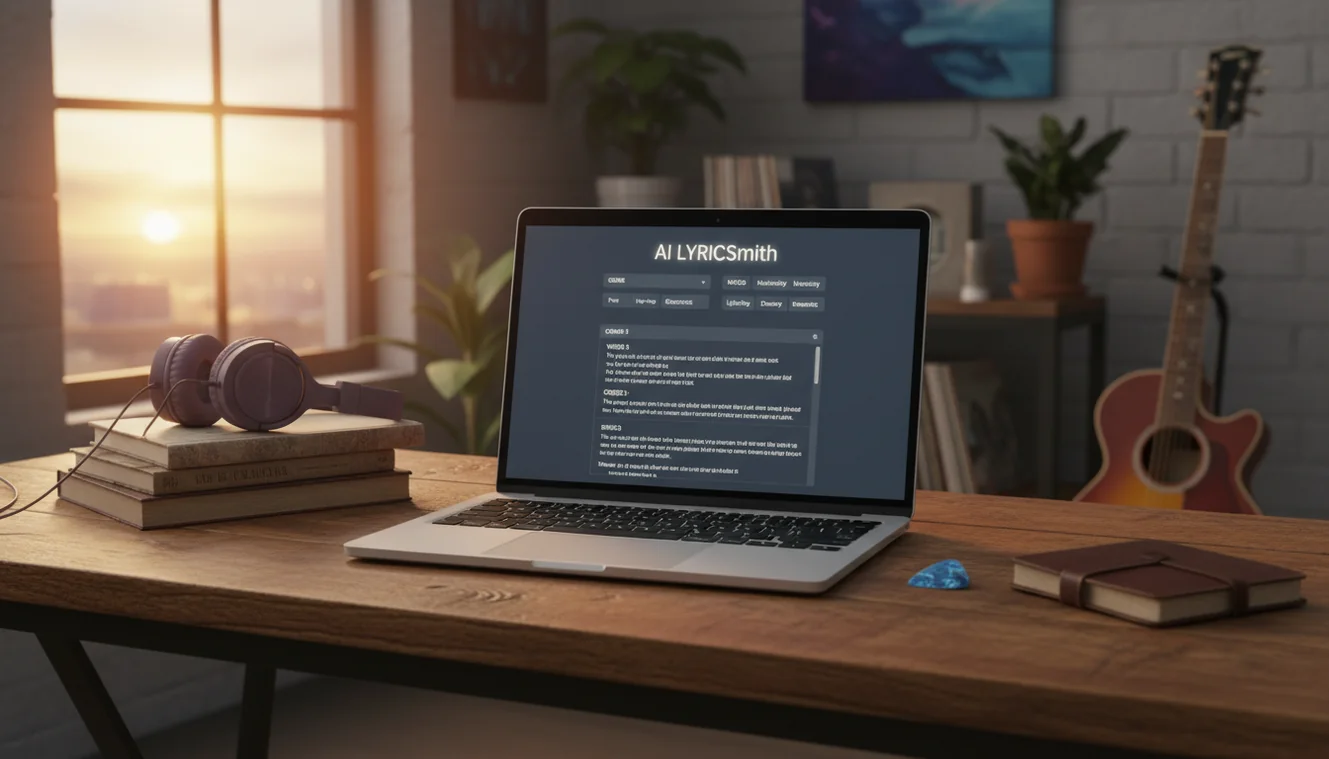
What Is an AI Lyrics Generator
An AI lyrics generator is a tool that creates song lyrics from a text prompt describing a theme, mood, genre, or scenario. It uses a language model to produce structured lyrics with verses, choruses, and bridges that follow standard songwriting conventions. The AI generates text based on patterns in its training data, not from personal experience or musical intuition.
Songwriting has always been a craft that combines structure with emotion. A verse sets the scene, a chorus delivers the emotional hook, a bridge provides contrast. These are not arbitrary conventions; they evolved because they work with how listeners process music. Repetition in the chorus creates familiarity. Narrative progression in the verses builds engagement. The bridge prevents monotony. An AI lyrics generator understands these structural patterns because they appear consistently in the millions of text examples it was trained on. What the AI does not have is the lived experience that makes lyrics resonate. It can write "I watched you walk away through the rain" because that imagery appears in countless songs. What it cannot do is draw from the actual memory of standing in the rain watching someone leave. This distinction matters, and it shapes how the tool is most useful: as a structural and creative starting point, not as a replacement for the songwriter's voice.
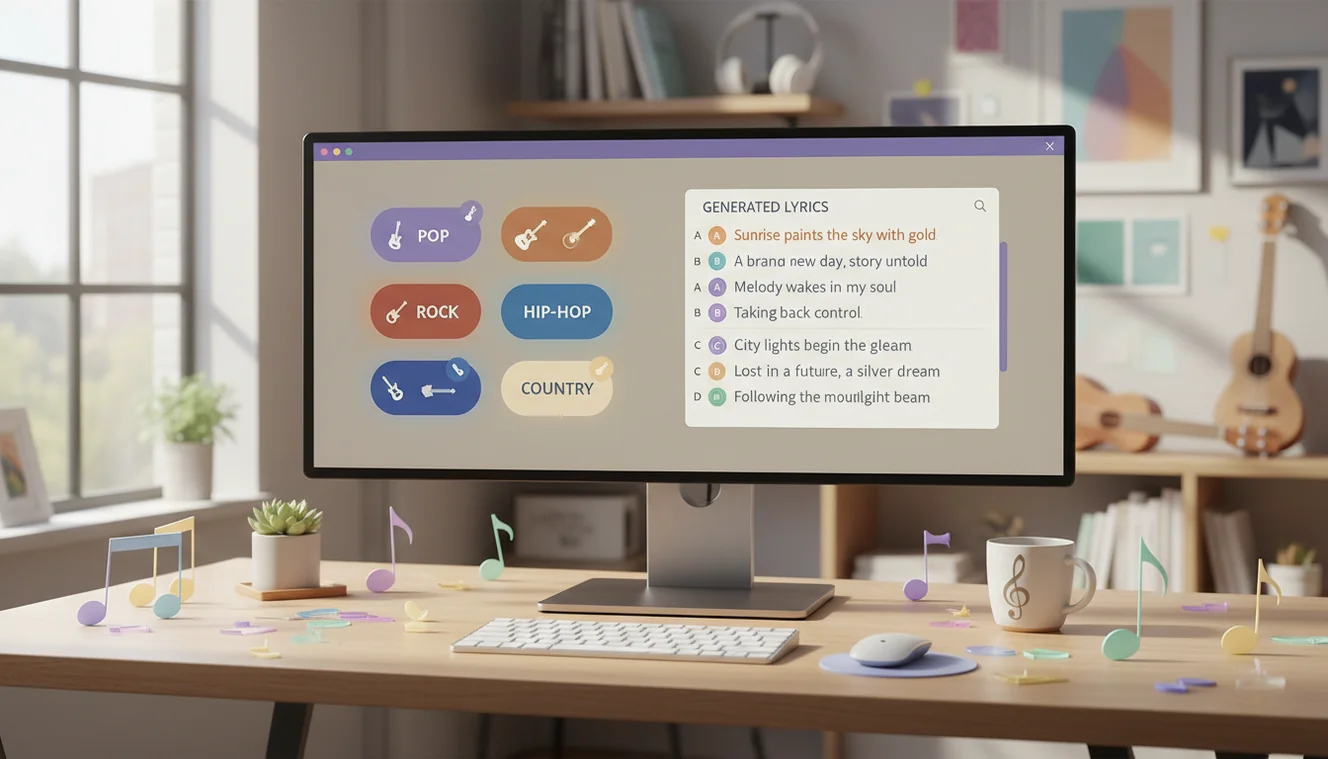
The tool on this page supports six genre modes; Pop, Rock, Hip-Hop, Country, R&B, and Indie, because genre conventions shape everything about how lyrics are written. A Country lyric tells a story with concrete imagery: trucks, towns, fields, front porches. A Hip-Hop lyric emphasizes wordplay, internal rhymes, and rhythmic density. An Indie lyric leans toward introspection and unconventional metaphors. Selecting the right genre ensures the AI applies appropriate vocabulary, structure, and thematic patterns. This is part of the AI writing tools collection on Write.info, where each tool uses a specialized prompt for its specific creative domain.
Song Structure Fundamentals
Understanding standard song structure helps you evaluate and improve AI-generated lyrics. Most popular songs follow recognizable patterns, and knowing what each section does makes editing more effective.
Verse. The verse is where the story lives. Each verse introduces new information; new imagery, new developments in the narrative, new perspectives on the theme. Verses typically share the same melodic pattern but have different words. The first verse establishes the setting and situation. The second verse deepens or complicates the theme. A third verse, if present, often provides resolution or a new angle. AI-generated verses tend to follow this progression reasonably well, though they sometimes become repetitive in imagery across verses. Watch for this and replace repeated images with fresh ones.
Chorus. The chorus carries the emotional core of the song. It repeats with the same or very similar words each time it appears, reinforcing the central message. Choruses are shorter than verses and use simpler, more direct language because they need to be memorable and singable. The AI generates choruses that generally work structurally, they are shorter, more repetitive, and more emotionally direct than the verses. Where AI choruses sometimes fall short is in creating a genuine hook: the one line or phrase that sticks in a listener's mind. The most memorable hooks in music history are deceptively simple, and simplicity is something the AI can emulate but not always achieve with the same instinctive precision.
Bridge. The bridge appears once, usually after the second chorus, and provides contrast. It might shift perspective, introduce a new emotion, change the rhythmic pattern, or ask a question that the final chorus answers. Bridges prevent the song from feeling circular. The AI typically generates bridges that are thematically connected to the rest of the song but tonally different, which is the correct approach. Sometimes the bridge feels too similar to the verses - if so, rewrite it to create stronger contrast.
Pre-chorus. Some songs include a pre-chorus; a short transitional section between the verse and chorus that builds tension. The AI may or may not include this depending on the genre and prompt. If you want a pre-chorus, mention it in your instructions.
How AI Writes Lyrics
The language model behind AI lyrics generation works differently from how a human songwriter writes, and understanding the difference helps you use the output more effectively.
A human songwriter typically starts with a feeling, a melody fragment, a line that popped into their head, or a personal experience. The writing process involves making choices driven by emotion, memory, and musical instinct. A songwriter might spend hours on a single line because it needs to sound right when sung, feel emotionally honest, and fit the melody's rhythm.
The AI starts with patterns. It has processed enormous amounts of text including published lyrics, poetry, and literary writing. When given a prompt like "melancholy breakup song in indie style," it identifies patterns associated with those descriptors - vocabulary choices, imagery types, structural conventions, emotional tones; and generates text that aligns with those patterns. The result is lyrics that look and read like real songs, follow appropriate genre conventions, and use imagery consistent with the theme. The lyrics are structurally competent and often surprisingly evocative.
The gap between AI lyrics and great songwriting lies in specificity and authenticity. The most compelling lyrics in any genre contain details that could only come from a specific person's experience. "I found your coffee mug behind the bookshelf" is more evocative than "I think about you every day" because it is concrete and particular. AI tends toward the general rather than the specific, because its training data rewards broad applicability over individual precision. The fix is simple: use the AI output as a framework and inject your own specific details, memories, and observations into the structure it provides.
How to Use the AI Lyrics Generator
- Describe your song concept in the input box. Include the theme, mood, and any specific imagery or story you want the lyrics to explore. The more detail you provide, the more distinctive the output will be. Example: "A nostalgic song about growing up in a small coastal town and leaving for the city, feeling torn between opportunity and home."
- Select a genre. Choose Pop for accessible, hook-driven lyrics. Rock for raw, energetic expression. Hip-Hop for rhythmic wordplay and flow. Country for narrative storytelling with concrete imagery. R&B for smooth, emotionally layered writing. Indie for introspective, unconventional phrasing.
- Click Generate Lyrics. The AI produces structured lyrics with labeled sections; typically two to three verses, a chorus, and a bridge.
- Read the lyrics aloud or sing them. Lyrics exist to be performed, not just read. Speaking or singing the words reveals rhythm problems, awkward phrasing, and lines that do not flow naturally. If a line stumbles when spoken, it will stumble when sung.
- Replace generic imagery with personal details. Swap broad, universal lines for specific ones drawn from your own experience or imagination. This is the single most important editing step for turning AI lyrics into something that feels authentic.
- Adjust for rhythm and melody. If you have a melody in mind, modify syllable counts and word stress patterns to fit your musical phrasing. The AI does not write to a specific tempo or rhythm, so lyrical adjustment is expected.
- Iterate. Generate multiple versions with slightly different prompts. Combine the strongest lines from different outputs. Songwriting is iterative, and using AI as a brainstorming tool across several generations often produces better raw material than a single attempt.
Genre Considerations and Rhyme Schemes
Each genre has conventions for rhyme, rhythm, and vocabulary that shape how lyrics sound and feel.
Pop lyrics favor clean end rhymes (ABAB or AABB patterns), simple vocabulary, and universal themes. The emphasis is on singability and memorability. Lines tend to be short and rhythmically even. Pop choruses often repeat a single phrase or title line. The AI handles pop conventions well because they are heavily represented in training data.
Rock lyrics range from narrative storytelling to abstract imagery. Rhyme schemes are looser than pop, near-rhymes and slant rhymes are common. Vocabulary can be grittier, more direct, and more confrontational. Rock lyrics often use longer, more complex sentences than pop. The AI generates rock lyrics that tend toward the classic rock register. If you want something closer to punk, metal, or alternative styles, specify that in your prompt.
Hip-Hop is the most technically demanding genre for lyric writing. It emphasizes internal rhymes, multisyllabic rhyme schemes, wordplay, metaphor, and rhythmic density. The AI produces Hip-Hop lyrics with recognizable flow patterns and rhyme structures, though the wordplay tends to be more straightforward than what skilled MCs produce. For complex internal rhyme schemes and double entendres, use the AI output as a foundation and layer in more intricate wordplay manually.
Country lyrics are built on storytelling and concrete imagery. They reference specific places, objects, and experiences. Rhyme schemes are typically consistent (ABAB), and the language is conversational and grounded. Country songs often follow a narrative arc across verses. The AI generates country lyrics that hit the genre's structural marks, though they sometimes lean on clichés. Push past the expected imagery by requesting specific settings or scenarios in your prompt.
R&B lyrics are emotionally layered, sensual, and rhythmically smooth. They use repetition, melismatic phrasing, and vocabulary that emphasizes feeling and intimacy. Rhyme schemes are flexible, and lines are often structured for vocal ad-libs and runs. The AI captures R&B tone reasonably well, producing lyrics with emotional warmth and appropriate vocabulary.
Indie lyrics prize originality over convention. They use unexpected metaphors, stream-of-consciousness phrasing, and literary references. Rhyme may be minimal or absent. The emphasis is on authenticity and distinctive voice. AI-generated indie lyrics can feel slightly too polished for the genre; real indie songwriting often includes deliberate imperfections and idiosyncratic word choices that the AI's tendency toward grammatical smoothness works against.
Limitations & Safety
AI-generated lyrics lack the lived emotional experience that gives great songwriting its resonance. The AI can arrange words into structures that resemble emotional expression, but it has not felt heartbreak, joy, anger, or longing. This means AI lyrics work as structural and creative frameworks, but the emotional substance needs to come from the songwriter. The most effective use of this tool is as a collaborator that handles structure while you supply the soul.
The AI does not compose melodies, rhythm patterns, or musical arrangements. It produces text only. Fitting lyrics to music requires adjusting syllable counts, word stress, and line lengths; work that the songwriter must do manually. A line that reads well on the page may not sing well, and vice versa.
Copyright and ownership of AI-generated lyrics is an evolving legal area. In many jurisdictions, copyright protection requires meaningful human authorship. Using AI output as a starting point that you substantially revise and transform is generally safer from a rights perspective than using AI output verbatim. Songwriters who plan to publish or commercially release songs that incorporate AI-generated material should consult legal guidance specific to their jurisdiction.
The tool may occasionally generate lyrics that closely resemble existing published songs, because the language model's training data includes patterns drawn from a vast corpus of text. Users are responsible for verifying originality before publishing. Write.info does not guarantee that generated lyrics are free from similarity to existing works.
Write.info does not store or retain any lyrics submitted or generated through this tool. All processing happens in real time. For additional creative writing tools including the AI poem generator and AI story generator, explore the full collection on the AI writing tools homepage.
Write Lyrics Anywhere
Use Write.info to brainstorm hooks, verses, and song concepts on desktop or mobile. Download the app to keep refining lyrics whenever inspiration hits.
Get Write.info AppAI Lyrics Generator App
The AI Lyrics Generator tool is available as part of the AI Writer app for iPhone and iPad. The app includes all writing, detection, and humanization tools in a single download with no account required. An Android version is currently in development.
The iOS app supports offline access to saved content and provides the same AI writing capabilities available on Write.info. Users receive 10 free generations per day on the website, while the app offers extended access through optional subscription plans.
Download on App Store