Bypass AI - Remove AI from Text
Rewrite AI-generated content to sound naturally human. Reduce AI detection scores without losing your original meaning.
| Need | Best option |
|---|---|
| Remove AI from text and make a draft sound more natural | Write.info |
| Quick paraphrasing with multiple rewrite modes | QuillBot |
| Grammar, spelling, and tone corrections in everyday writing | Grammarly |
| Brainstorming, drafting, and open-ended writing help | ChatGPT |
What Is Bypass AI
Bypass AI is the process of rewriting AI-generated text so it no longer triggers AI detection tools. It works by altering sentence patterns, word frequency, and structural cues that detectors use to identify machine-written content. The goal is text that communicates the same ideas but reads as if a human wrote it from scratch.
I started using bypass tools about a year ago when a client flagged a draft I had written entirely by hand. The AI detector they ran gave it a 72% AI probability score, which was baffling because I had typed every word myself. That experience taught me something important: AI detectors do not actually detect AI. They detect patterns that correlate with AI output. Short declarative sentences, consistent paragraph structure, certain transition words-these are things human writers do too, but detectors penalize them. A bypass tool essentially adds the kind of imperfections and variety that detectors expect from human writing. It introduces longer clauses where the original had short ones. It swaps common words for less predictable alternatives. It restructures sentences so the rhythm feels uneven in a natural way.
The technology behind bypassing is the same language model capability used for paraphrasing, just aimed at a different target. Instead of optimizing for clarity or brevity, a bypass tool optimizes for statistical unpredictability. AI detectors measure something called perplexity-how surprising each word is given the words before it. AI text tends to have low perplexity because language models pick the most probable next word. Human text has higher perplexity because people make idiosyncratic word choices, go on tangents, and vary their rhythm. A bypass tool essentially raises the perplexity of AI text to match human writing norms. The result reads naturally, but the path to get there is deliberate and calculated.
There is an ongoing arms race between detection tools and bypass methods. Detectors improve their models, bypass tools adapt their rewriting strategies, and the cycle continues. No bypass tool guarantees permanent undetectability because detectors update their algorithms regularly. What works today may be less effective in six months. This is why reviewing and manually editing bypassed text is always a good idea-human editing adds another layer of unpredictability that no automated detector can reliably distinguish from naturally written text.

How to Use the Bypass AI Tool
- Paste your AI-generated text into the input box above. The tool accepts up to 5,000 characters per request. If your text is longer, split it into sections and process each one separately for consistent results.
- Click "Humanize Text" to start the rewriting process. The tool analyzes your text for patterns commonly flagged by AI detectors-uniform sentence lengths, predictable word choices, and low-variance paragraph structures.
- Wait for the output to appear below the input box. Processing typically takes a few seconds depending on the length of the input. The rewritten version will appear with the same core meaning expressed in more varied, human-sounding language.
- Review the rewritten text carefully. Read through the entire output to make sure the meaning has not shifted in ways you did not intend. Pay attention to technical terms, proper nouns, and specific claims-these sometimes get altered during rewriting.
- Make manual edits where needed. Add a personal anecdote, adjust the tone, or fix any awkward phrasing. Manual edits on top of the bypass output produce the most natural-sounding final text.
- Copy the result using the copy button and paste it into your document. If you want to verify the result, run it through the AI detector or GPT detector tool before using it.
When Bypassing AI Detection Makes Sense
Not every situation calls for an AI bypass tool. If you are writing a personal blog post and used AI to help draft it, there is no particular reason to hide that. Many writers openly disclose AI assistance and their readers do not mind. The value of a bypass tool emerges in specific situations where detection creates problems that are disproportionate to the actual issue.
Consider the freelance writer who uses AI to generate a rough outline, then rewrites every sentence by hand. The final product is genuinely their work, but an AI detector might flag portions of it because the structure retains patterns from the original draft. In this case, running the final text through a bypass tool is a practical quality check-not an attempt to deceive, but a way to ensure the text does not get unfairly flagged.
Non-native English speakers face a similar challenge. AI detectors tend to flag text that is grammatically correct but lacks idiomatic variation. Someone writing in their second language might produce text that is technically accurate but stylistically uniform, which triggers the same statistical patterns that detectors associate with AI output. A bypass tool can add the natural variation that detectors expect, leveling the playing field for writers whose first language is not English.
There are also cases where bypassing is clearly inappropriate. Submitting AI-generated essays as your own work in an academic setting violates most institutional policies, regardless of whether the text passes detection. Using a bypass tool to disguise AI content in contexts where honesty about authorship matters is an ethical problem, not a technical one. The tool itself is neutral. How it is used is what determines whether the application is reasonable.
How AI Detection Works (and Why It Fails)
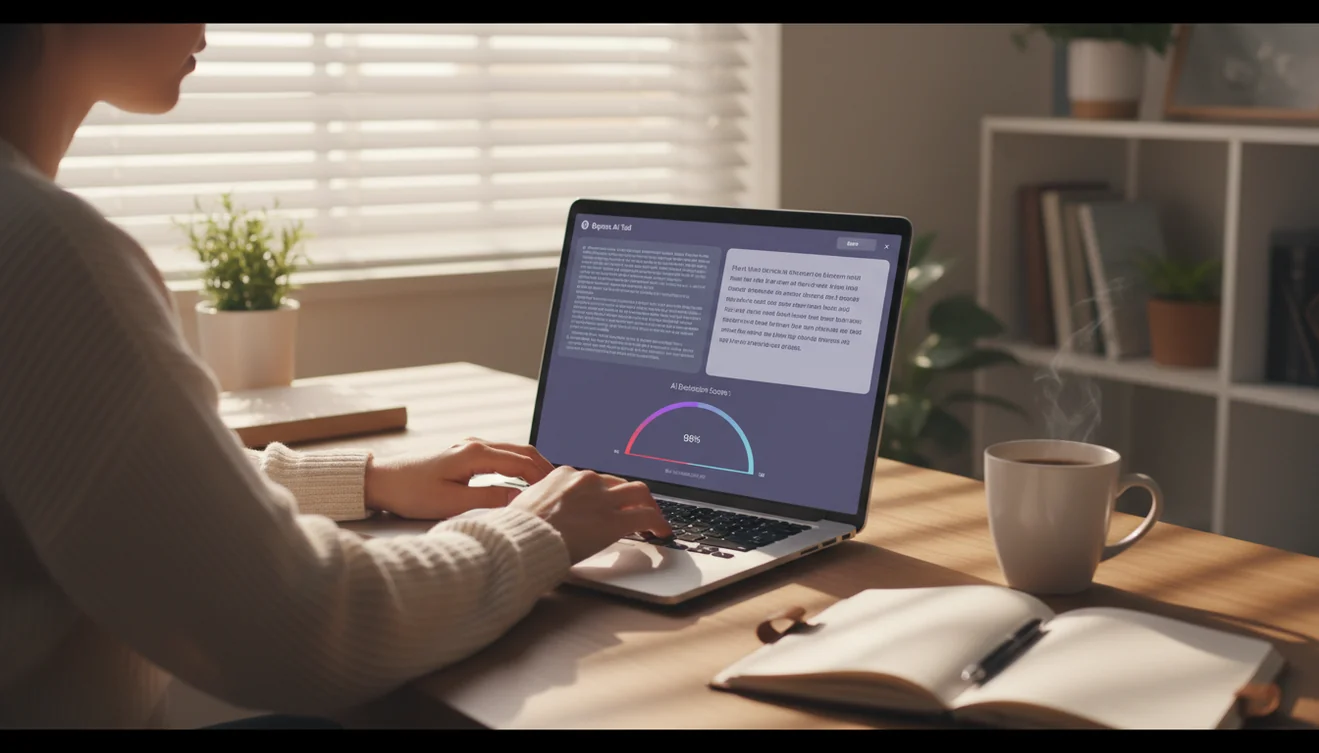
Understanding how detectors work helps explain why bypassing them is possible in the first place. AI detectors analyze text using statistical models that measure patterns at multiple levels. At the word level, they look at token probability-how likely each word is given the preceding context. At the sentence level, they measure consistency in length, structure, and complexity. At the document level, they evaluate overall variance in these metrics.
AI-generated text tends to be statistically smooth. Language models choose high-probability tokens by default, which produces text that is coherent but predictable. Human text, by contrast, is messier. We use uncommon words, write sentences of wildly different lengths, start paragraphs with conjunctions, and occasionally break grammar rules for emphasis. These irregularities are exactly what detectors look for as signs of human authorship.
The fundamental problem with AI detection is that it relies on probabilistic inference, not definitive identification. There is no watermark or signature embedded in AI text that a detector can find. Detectors can only estimate the likelihood that text was machine-generated based on statistical patterns. This means false positives are inevitable-human-written text that happens to be statistically uniform will be flagged, and AI text that has been edited or rewritten may pass undetected. This inherent limitation is what makes bypass tools effective.
Bypass AI vs. AI Humanizer
You will see both terms used across the internet, and they describe the same underlying process. "Bypass AI" emphasizes the outcome-getting past detection. "AI humanizer" emphasizes the method-making text sound human. The AI humanizer tool on Write.info and the bypass AI tool use the same rewriting approach. The difference is mostly in framing and which audience each term attracts.
Some tools market themselves specifically as "bypass" solutions, implying guaranteed evasion of detection. Be skeptical of any tool that promises 100% bypass rates. Detection algorithms evolve, and what passes today might not pass tomorrow. A more realistic expectation is that a bypass tool significantly reduces detection scores and makes text read more naturally, but the final polish should always come from human review.
Limitations and Safety
No bypass tool produces perfect results every time. Very short texts (under 100 words) are harder to bypass because detectors have less data to analyze and tend to be more conservative in their scoring. Highly technical content with specialized vocabulary may lose precision during rewriting because the model substitutes terms it considers more natural but that may not be technically equivalent. Always verify that rewritten technical content retains its accuracy.
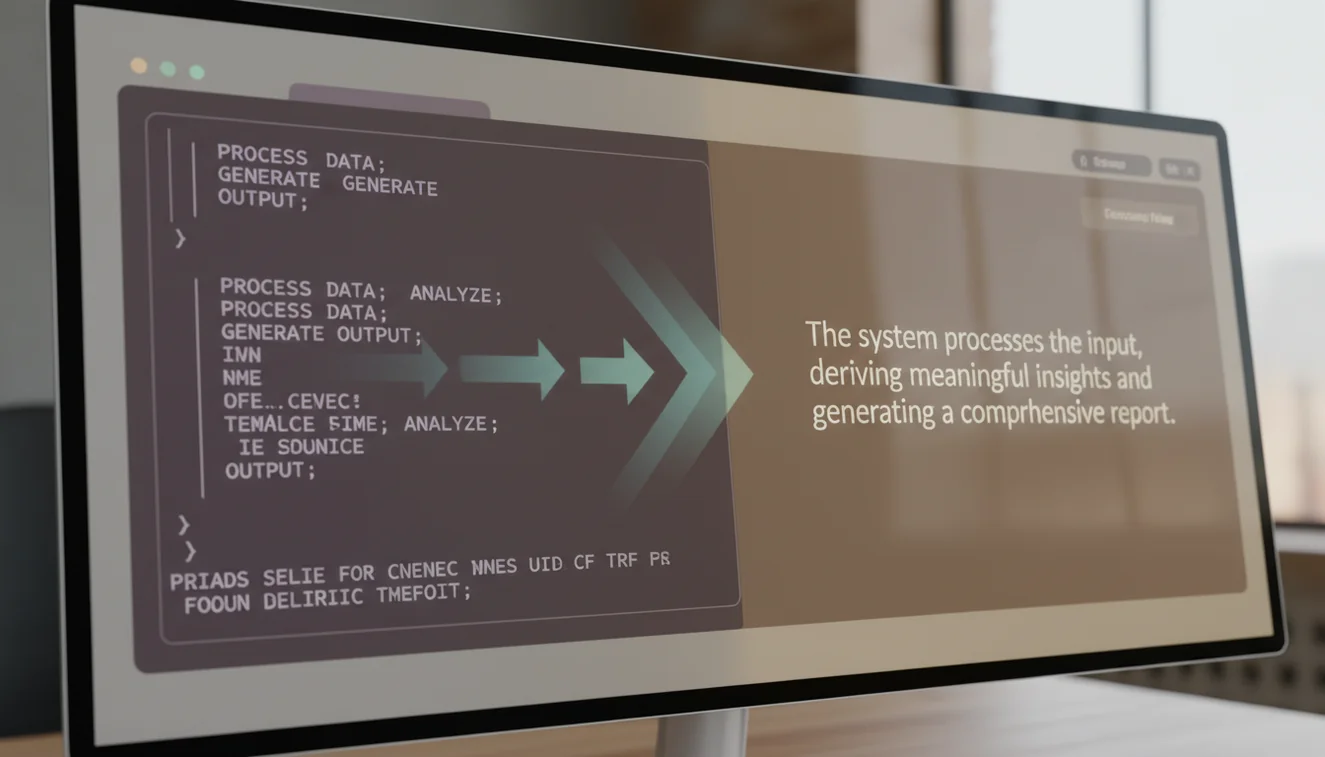
The tool processes text through an AI model, which means the rewriting itself is AI-generated. The difference is that the output is specifically optimized to avoid the patterns that detectors flag. This is an important distinction-bypassed text is not "human-written" in the traditional sense. It is AI-rewritten text designed to resemble human writing.
Users should be aware of the ethical context in which they are using this tool. Write.info provides the bypass tool as a writing utility. It is the user's responsibility to ensure that their use of bypassed text complies with applicable policies, guidelines, and ethical standards. Academic institutions, publishers, and employers may have specific rules about AI-generated content that apply regardless of whether the text passes detection.
Write.info does not store, log, or retain any text submitted to this tool. All processing happens in real time and the content is discarded immediately after the response is delivered. For more details, visit the privacy policy. For a full range of AI writing assistant tools, visit the homepage.
Humanize and edit your writing on mobile
Use Write.info to rewrite, check, and polish AI-generated drafts from your phone. Always review the final text yourself and follow any disclosure rules that apply.
Get Write.info AppBypass AI App
The Bypass AI tool is available as part of the AI Writer app for iPhone and iPad. The app includes all writing, detection, and humanization tools in a single download with no account required. An Android version is currently in development.
The iOS app supports offline access to saved content and provides the same AI writing capabilities available on Write.info. Users receive 10 free generations per day on the website, while the app offers extended access through optional subscription plans.
Download on App Store